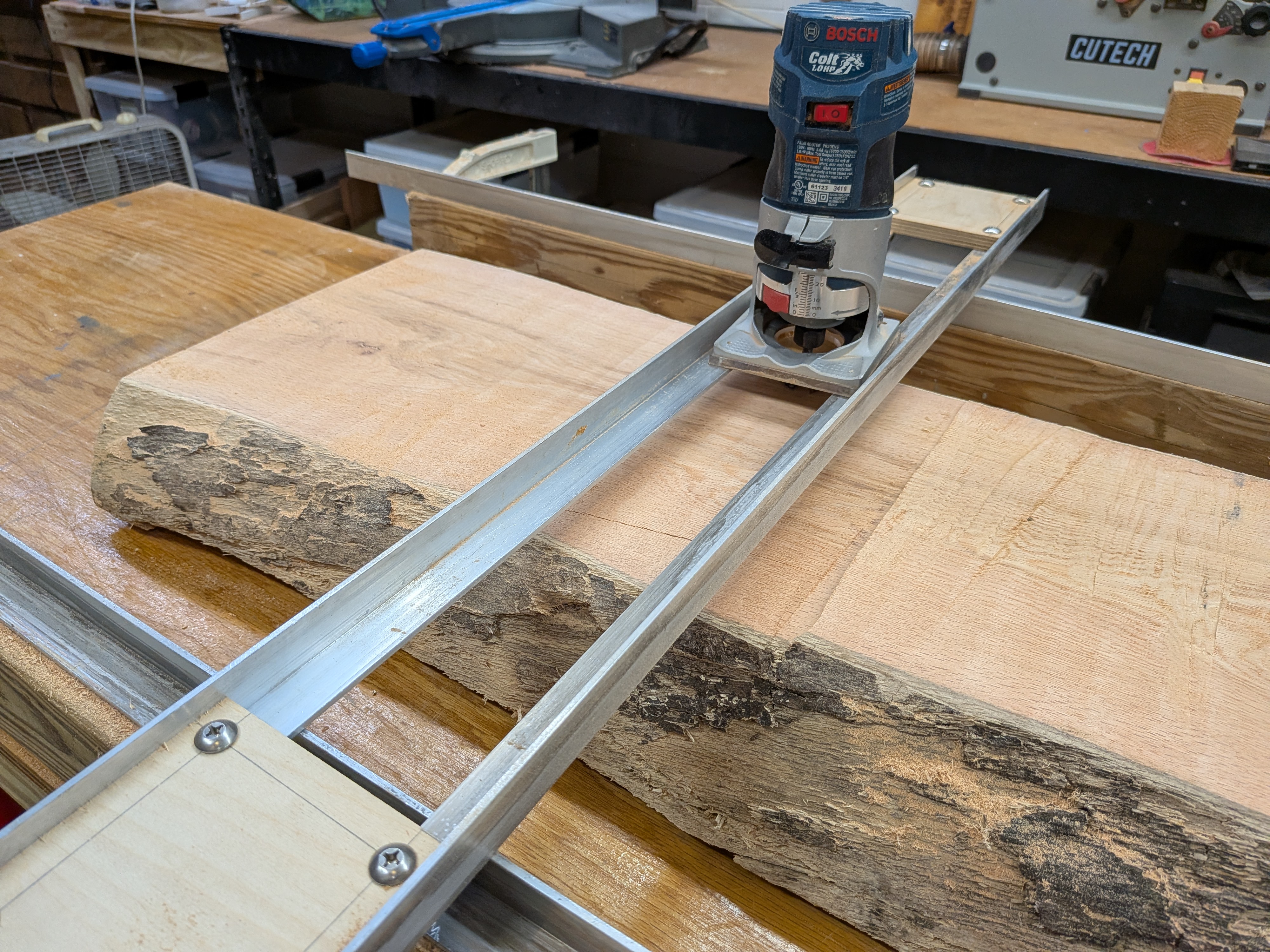
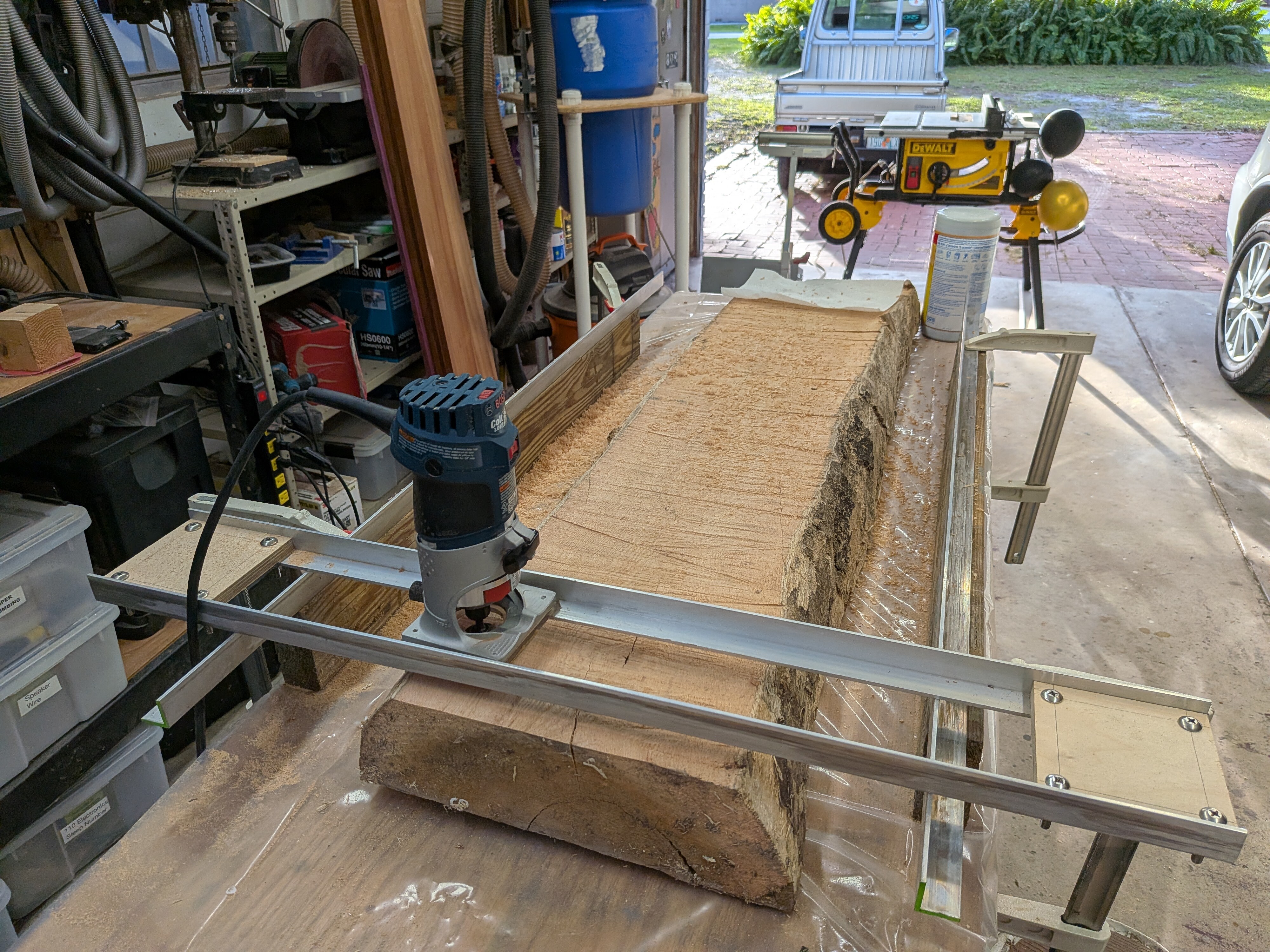
This shows the basic router sled design and build. The 4 L-angle aluminum parts are 1"x1"x48" and cost about $16. The stainless steel fasteners and plywood I had laying around.
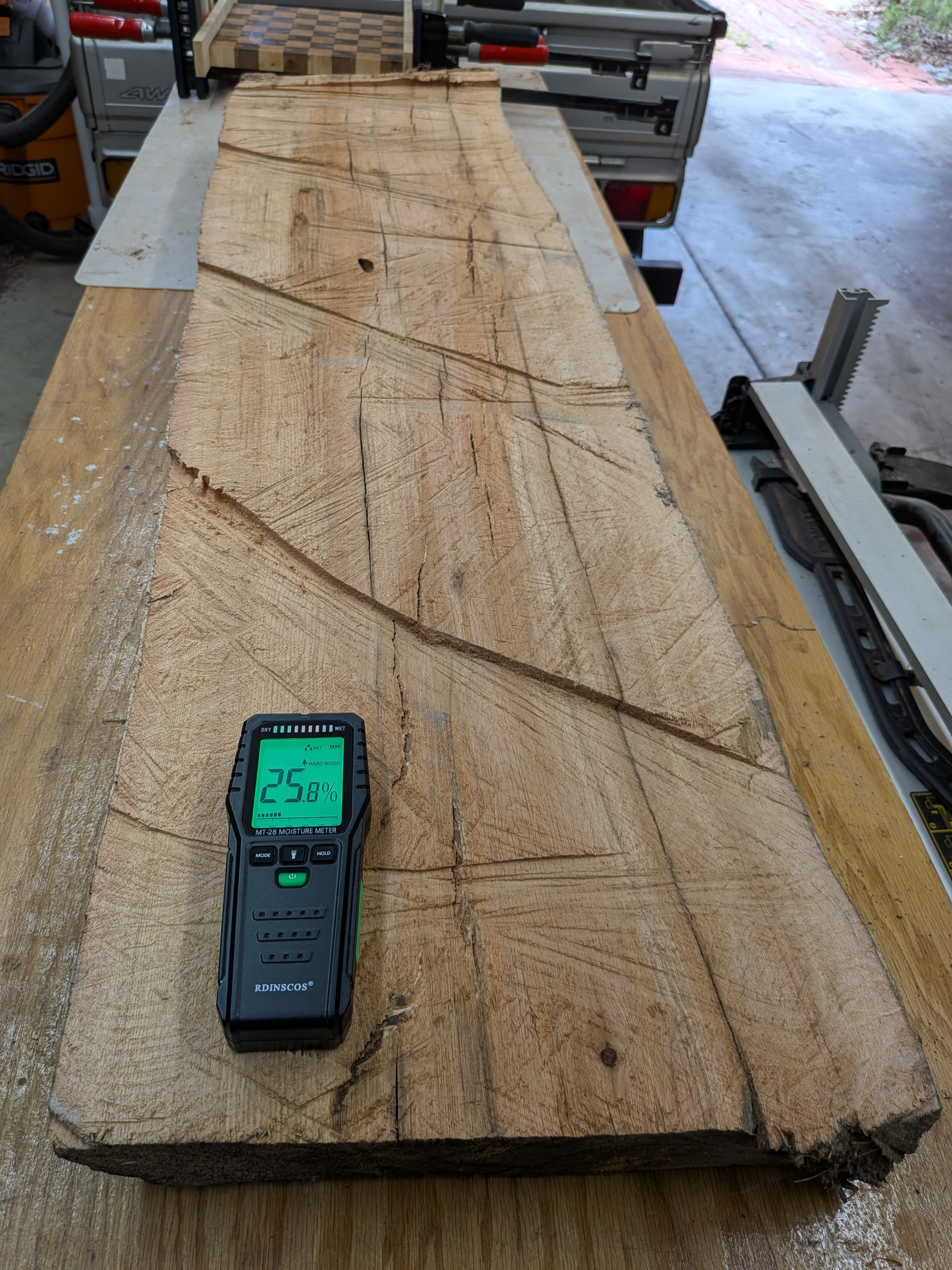
The slab comes from the shores of Lake Superior in Michigan’s Upper Peninsula. My friend Kevin cut it with a chainsaw. A group of five camped along the lake under these amazing trees. To think of the winters and the weather that these trees endured.
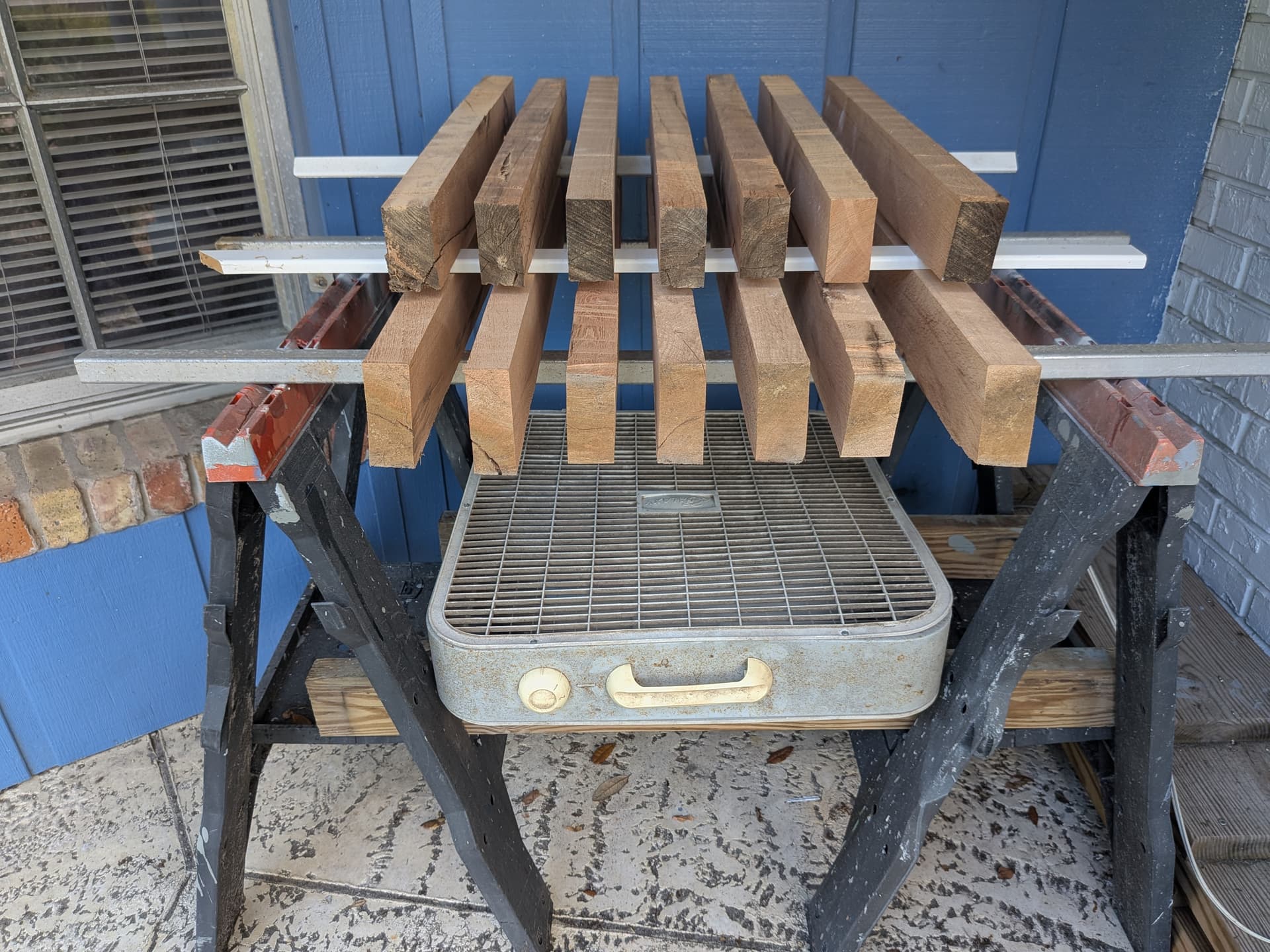
The moisture level was initially over 25%. The after milling into rough lumber, it will sit drying in the shade for a few weeks until the moisture is down to the 8-9% range. Postscript: it took 6 weeks to dry.
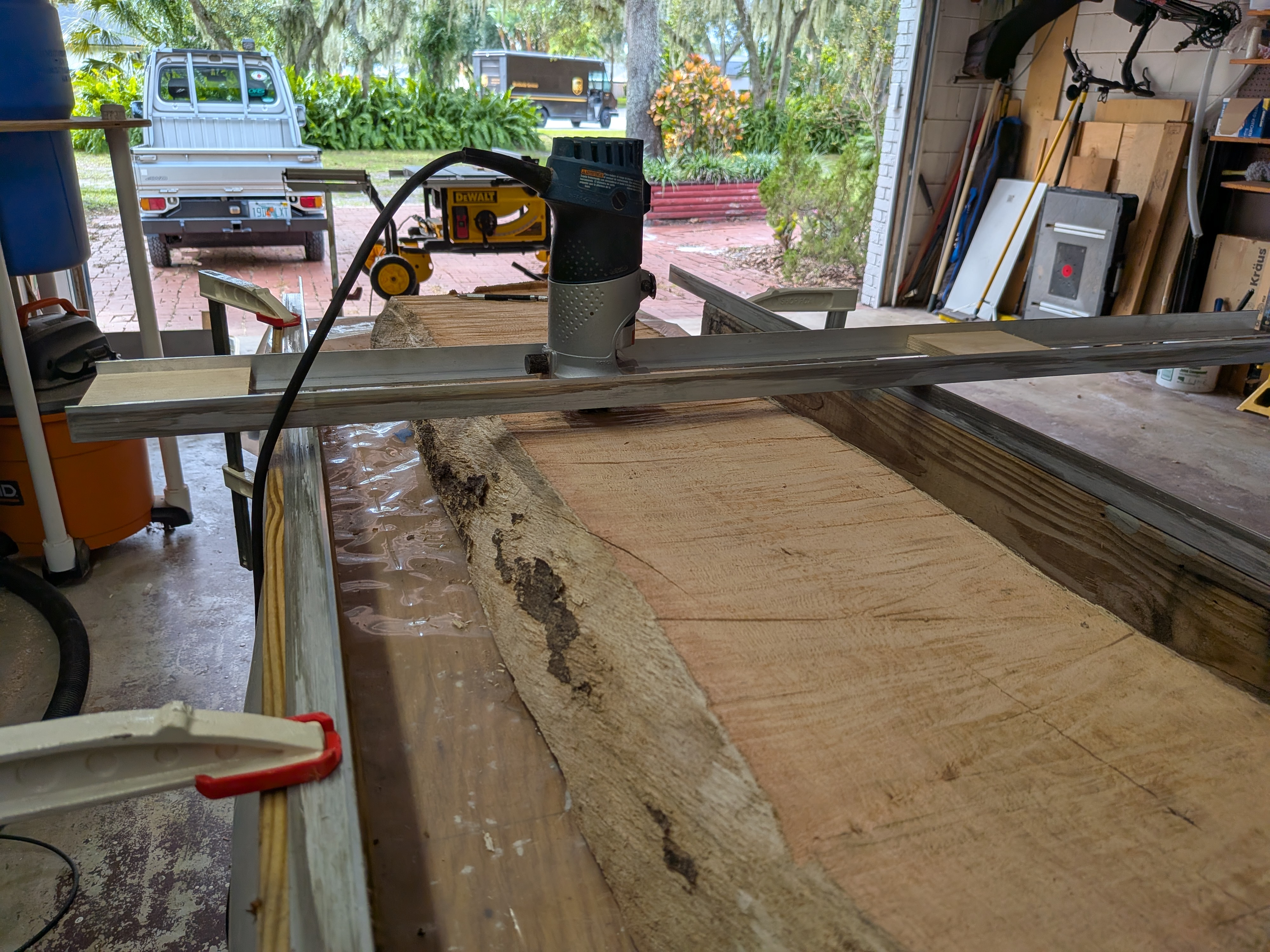
I used a small router but was still able to mill about 1/8" off for each pass.
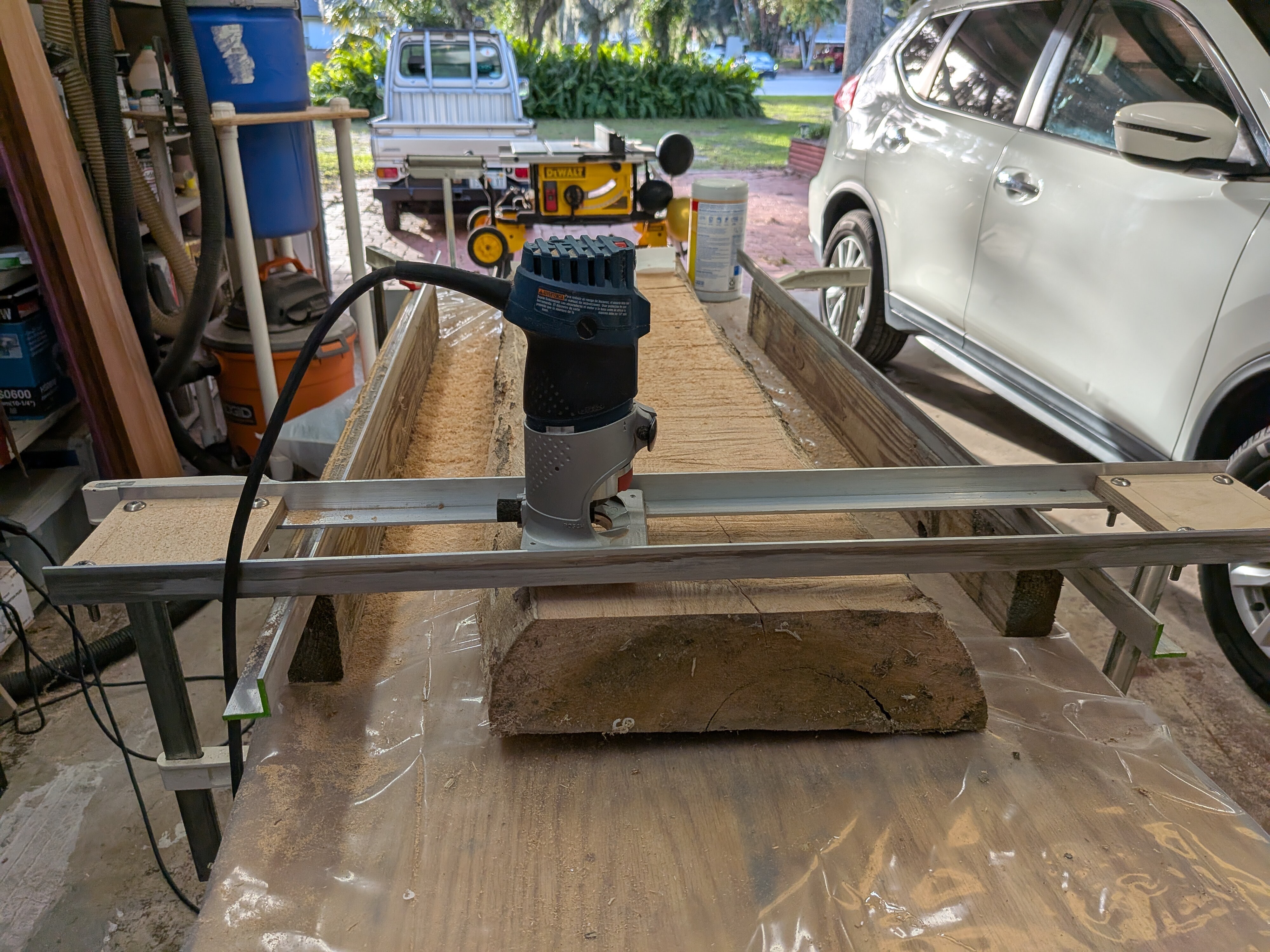
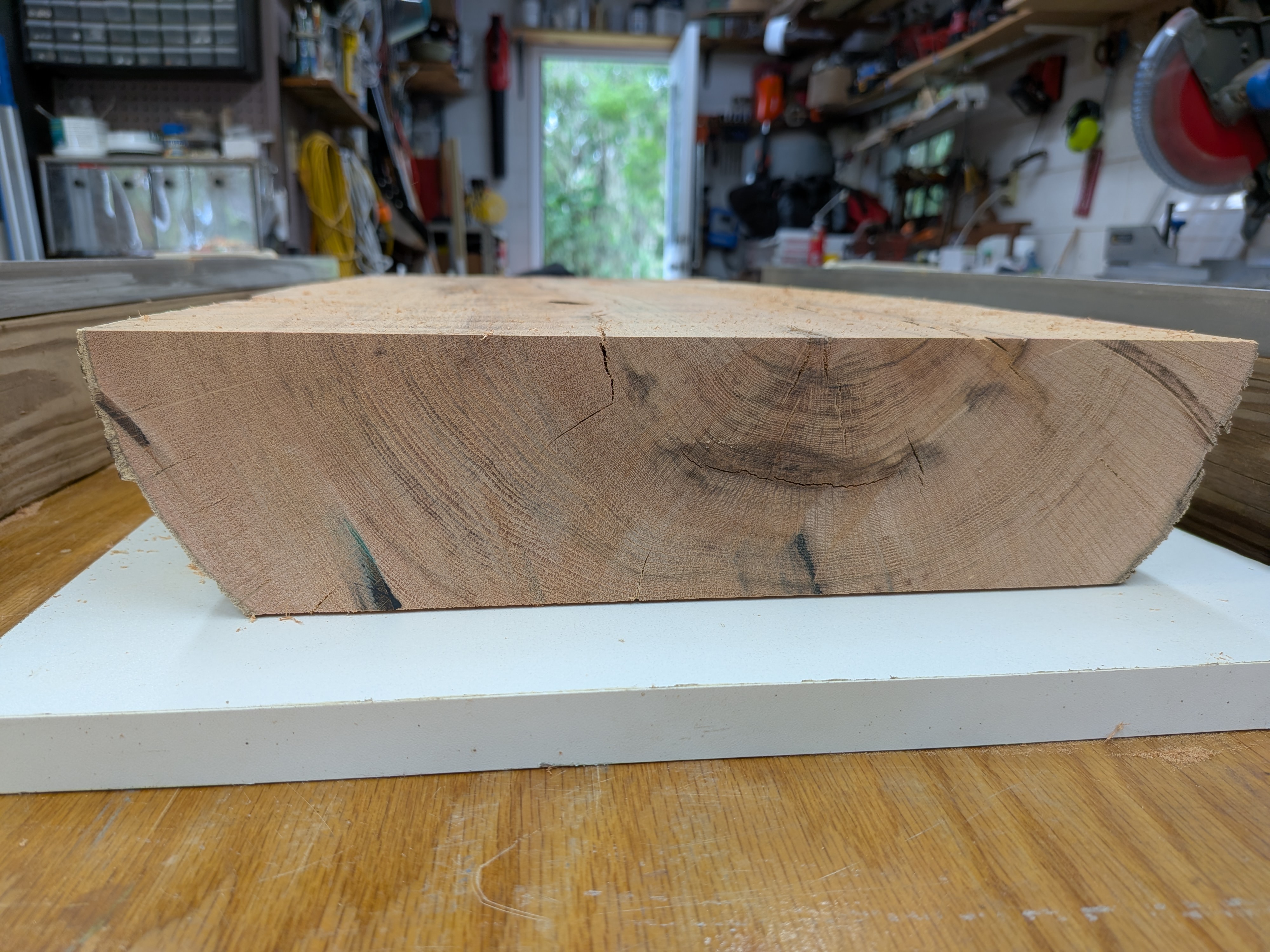
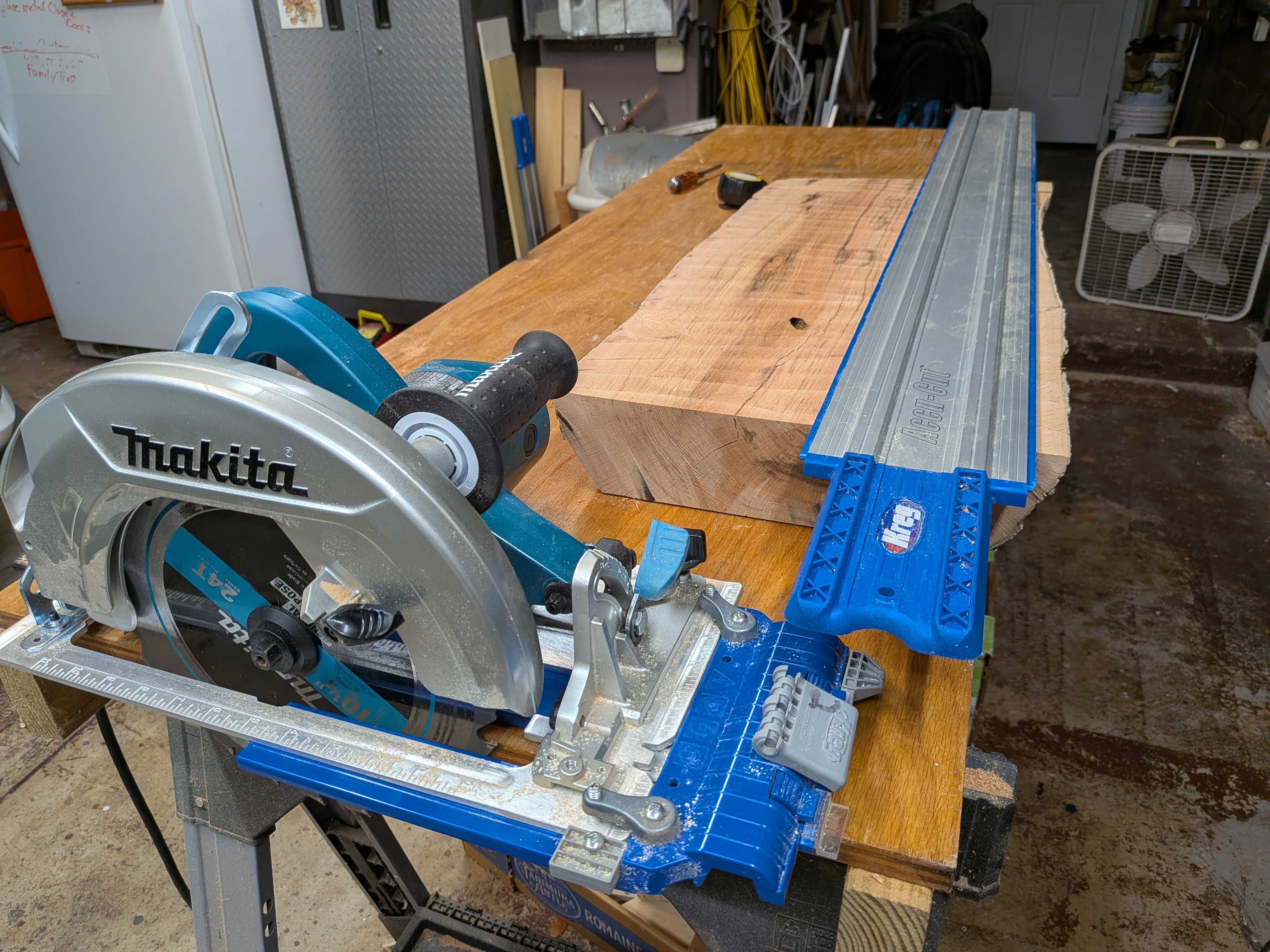
About 2/3 of the slab was thicker so I cut it into two parts and milled the parts separately. Next I used a track saw for the first cut to create a flat edge, and finished cutting on a table saw.

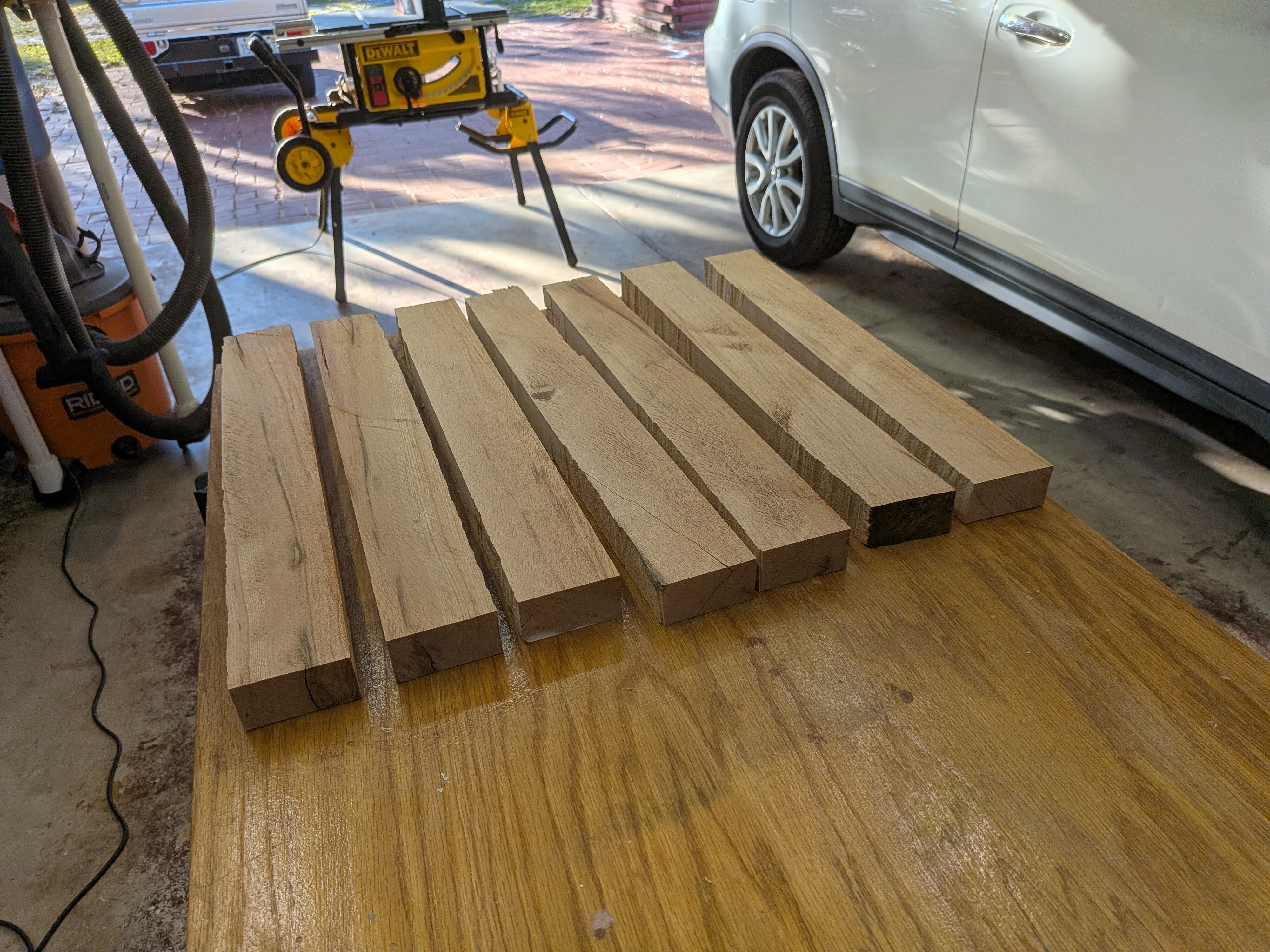

These boards look fairly straight but over time there was considerable warping and cracking. I’ve since learned that it can help to seal the board ends with paint to slow the drying process and reduce cracking.
The dark wood is Sapele, from central Africa. The grain and color make for a good match with the Oak.


