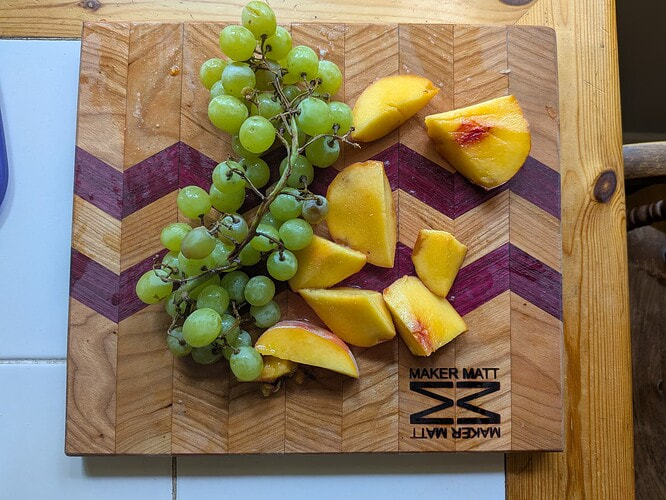
Your cutting board can last for years, however not all cutting boards are equal. Let’s cut to the chase, how to destroy your cutting.
How to destroy a cutting board
- Let it get too wet
a. Let it soak in the sink
b. Routinely let it get wet without protection - Let it get too dry
a. Ignore wax and oil treatments (note below) - Store it with exposure to the sun and UV light
- Let it get dirty where biology will do it’s thing
Give your cutting board a little respect
OK, not that that is out of the way. Without a lot of fuss, let’s give the board some respect and it will last a long-long time.
- Keep it clean. Not that if you sponge it with soap, and not rinse it, residual soap will get in your food.
- Keep it dry and protected from skylight and window UV light
- Hit it with a bit of butcher block conditioner from time to time
- Use one side for cutting and the other side for presentation. Some boards have feet and this is not feasible.
End-grain and edge-grain cutting boards
Definitions:
Edge-grain cutting board: A type where the wood strips are glued together with their long sides (edges) facing up, forming a surface parallel to the wood’s grain for durability and affordability.
- Edge-grain boards are easer to make, and tend to show the grain of the wood better. End-grain also show the grain and exposing the grain can be very interesting.
End-grain cutting board: A type where the wood pieces are arranged with their cut ends facing up, creating a surface perpendicular to the grain that’s gentler on knives but more expensive to produce.
- From the heart of the log (the center bits): You get cool, looping circles stacked around a middle dot, kinda like ripples in a pond.
- From the sides (tangential cuts): Wavy, smiley curves or big U-shapes that bend and flow like rolling hills.
= From straight lines through the core (radial slices): Neat, parallel streaks marching in a row, super clean and orderly like train tracks.
HOWARD Butcher Block Conditioner
Food Grade Mineral Oil & Natural Waxes