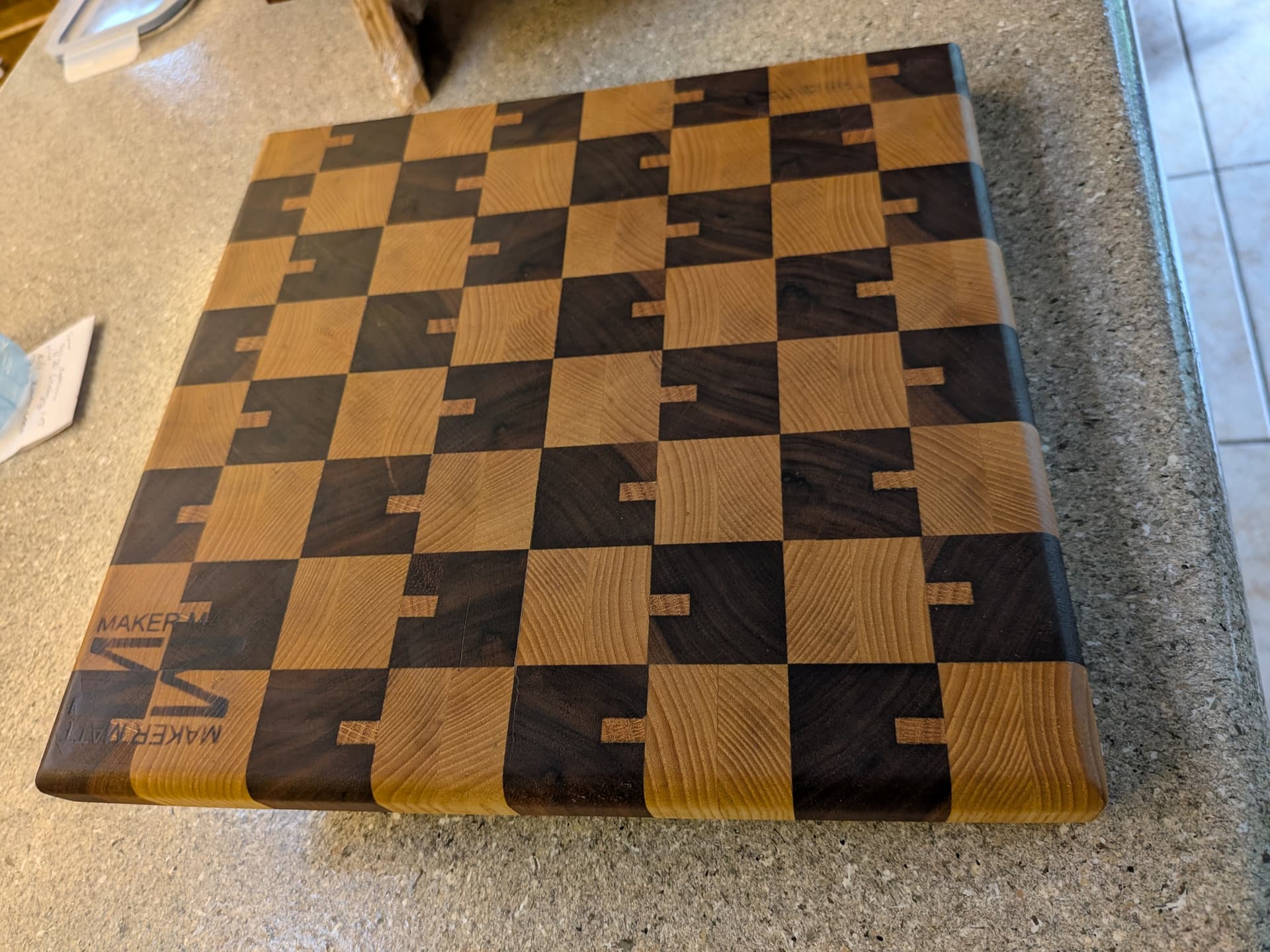
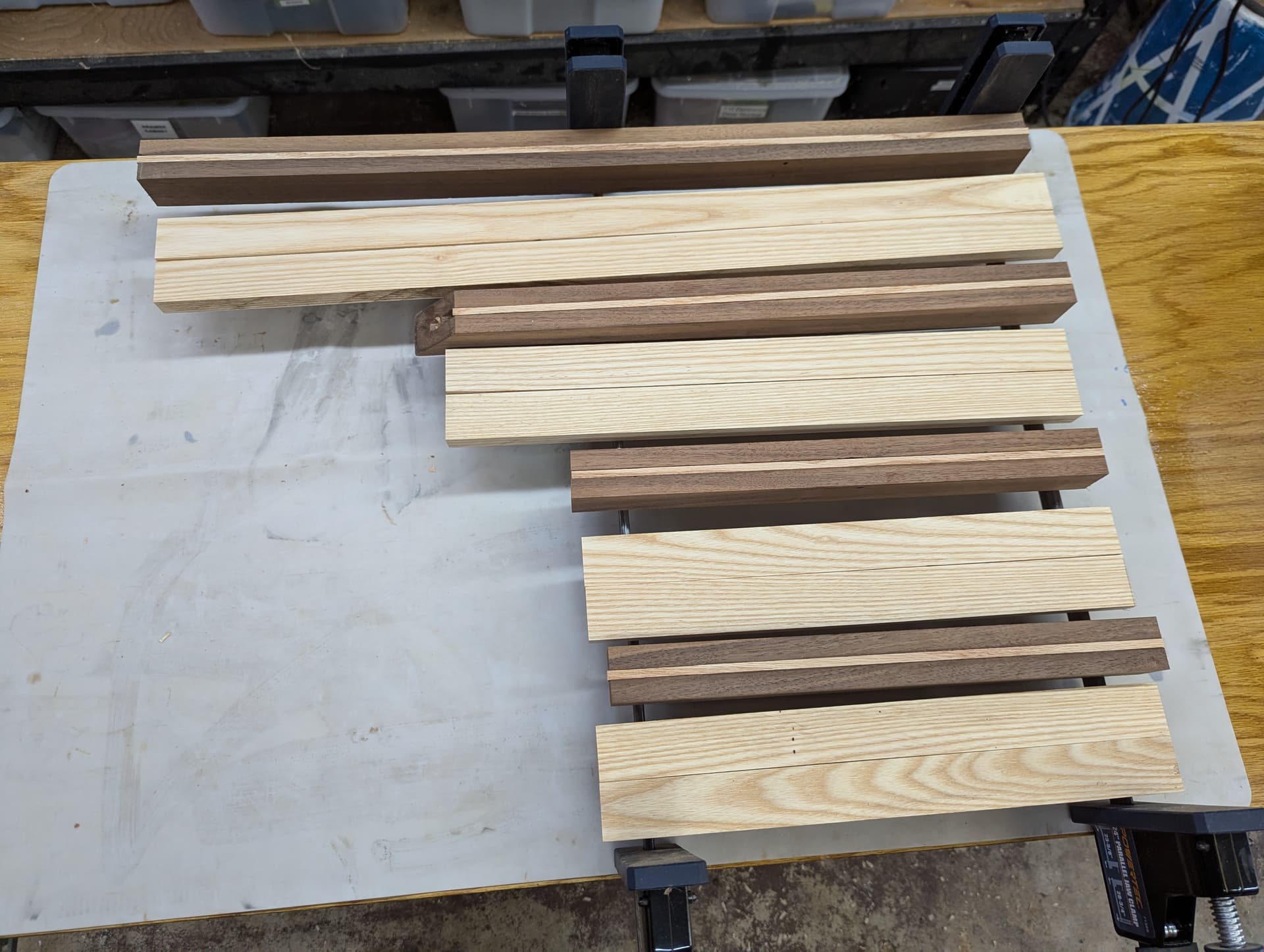
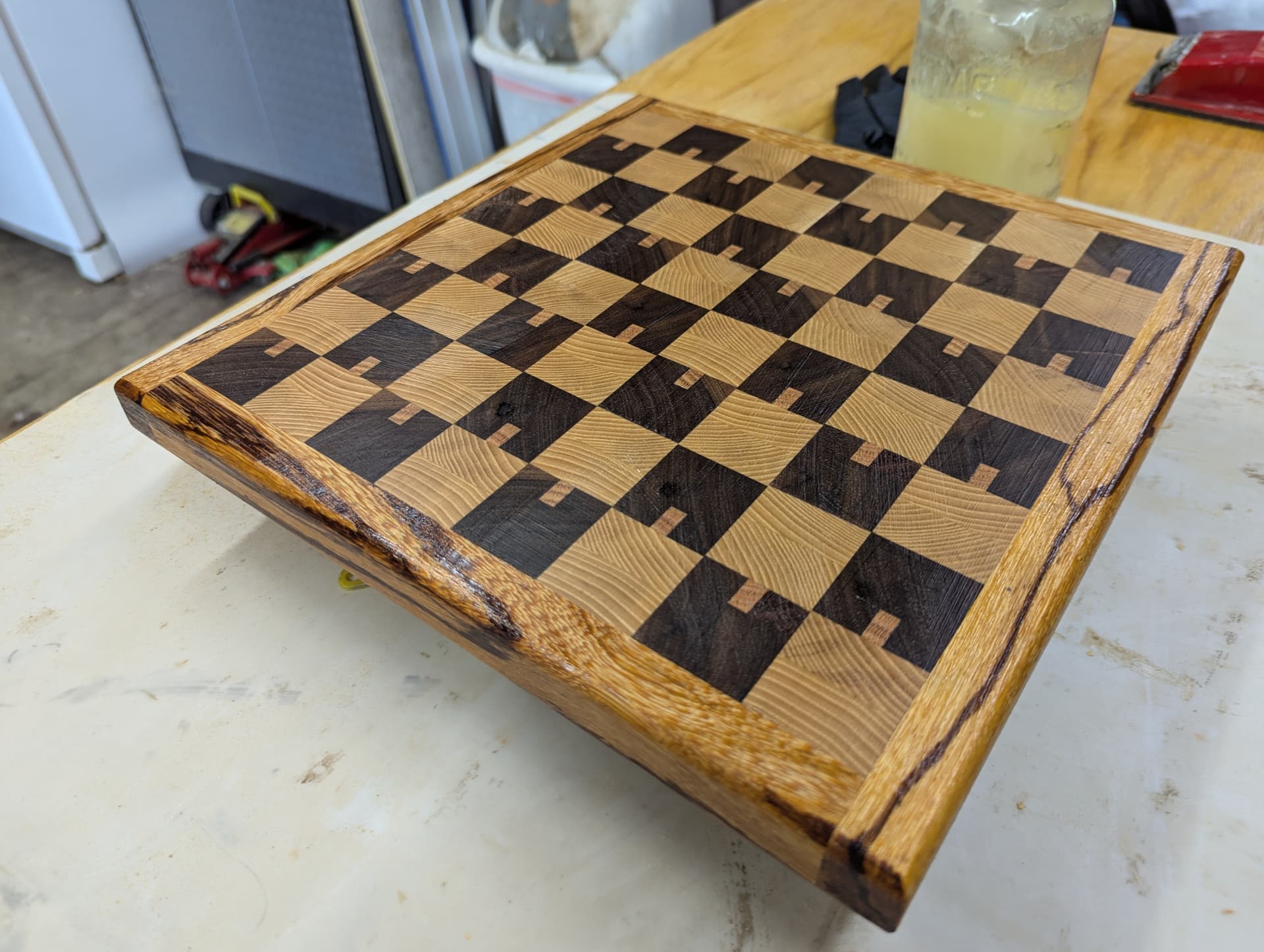
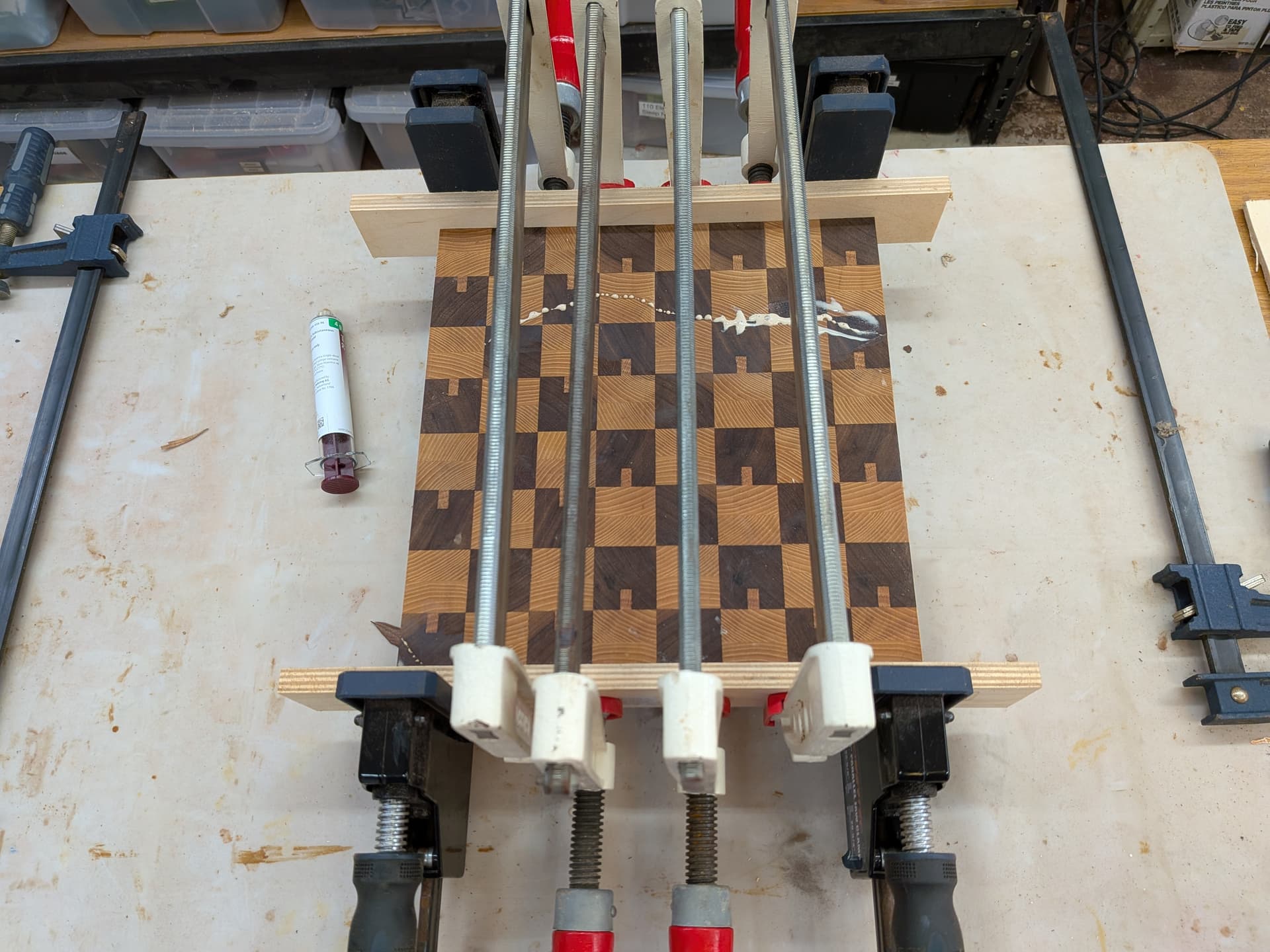
Reclaimed walnut and oak cutting board. The walnut was salvaged from furniture found on the side of the road. A notch in the walnut was used to hold a backing panel. The notch was later filled with oak.
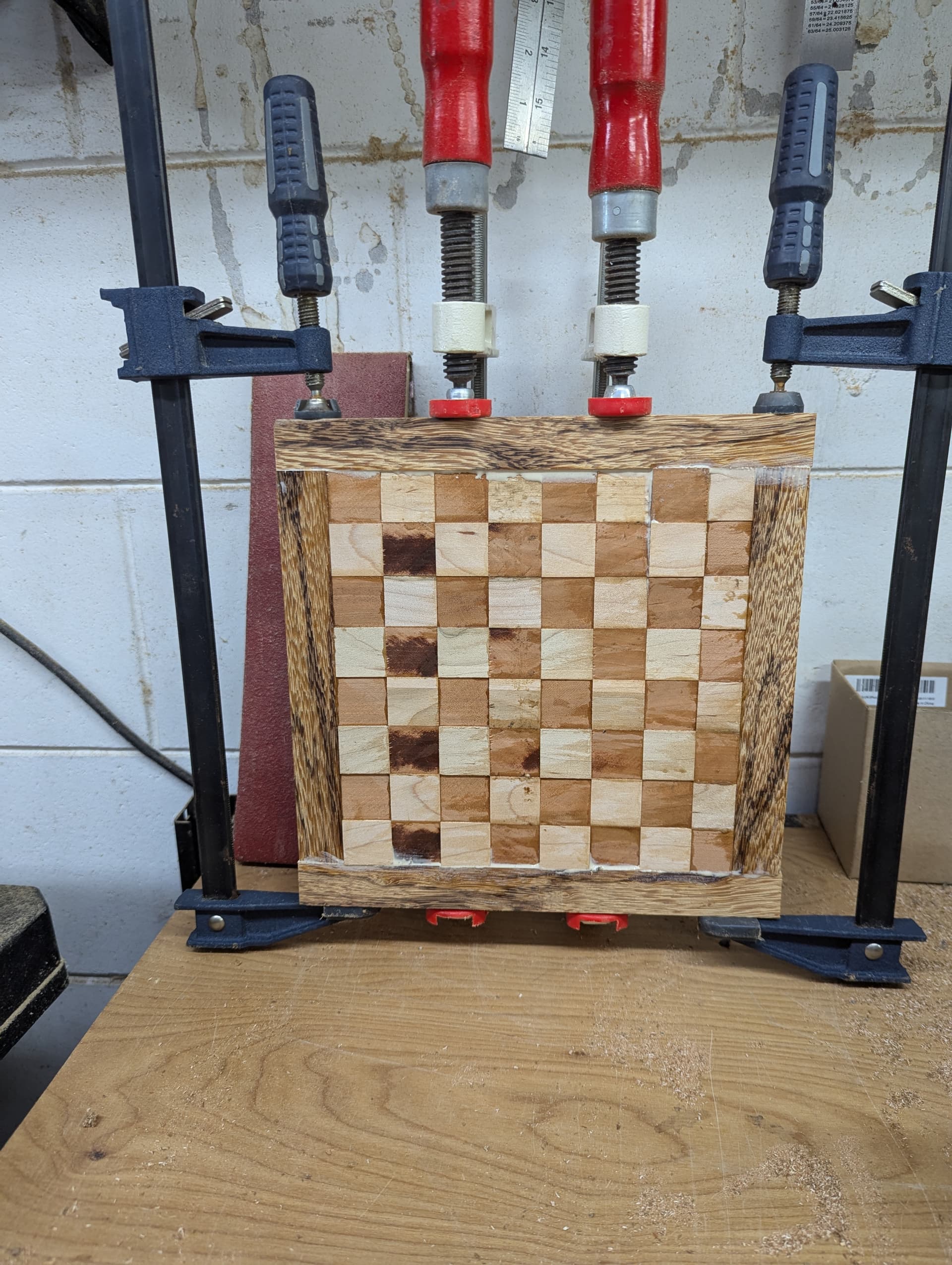
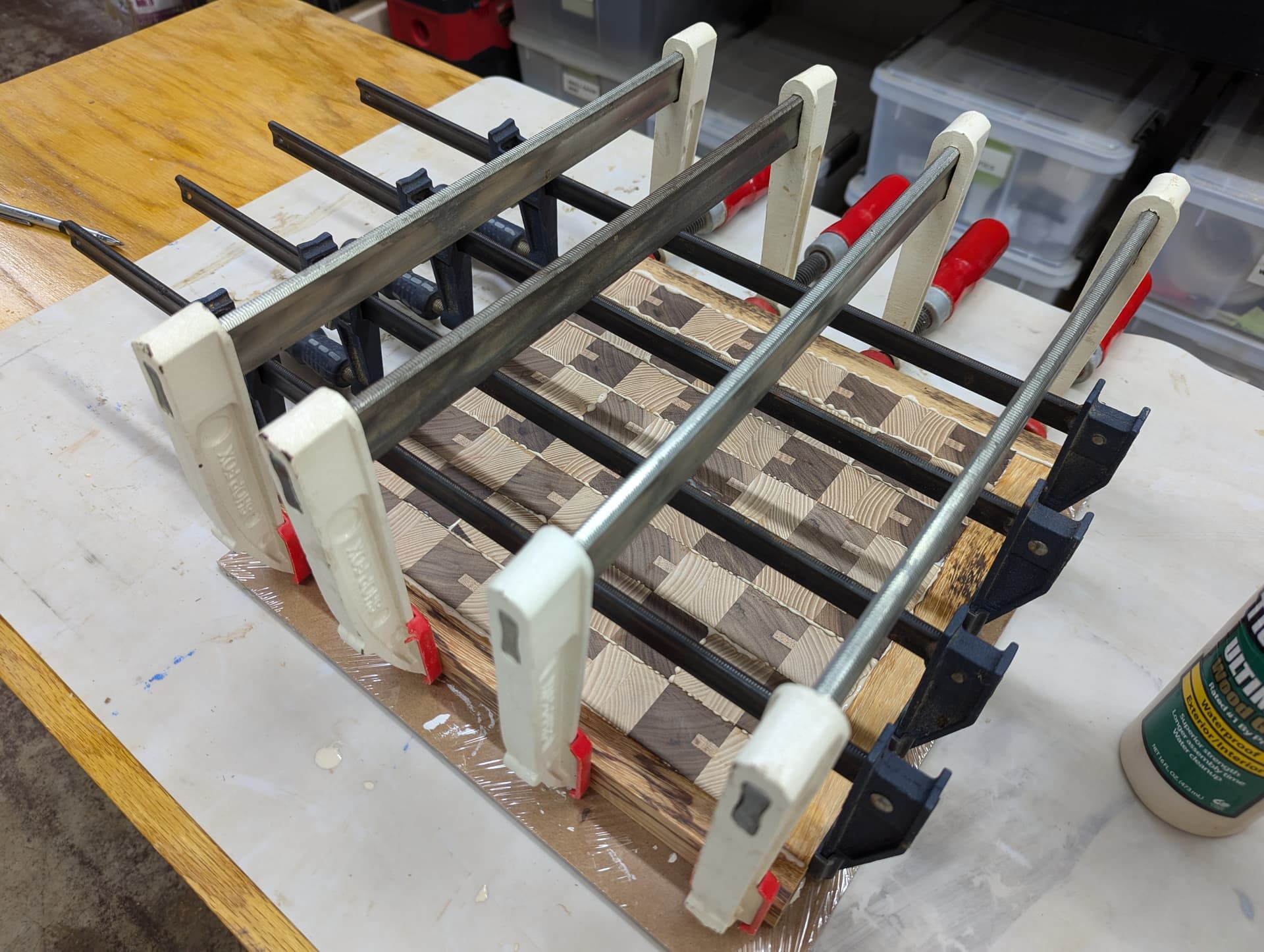
A collection of cherry and teak boards were made having different border woods, experimenting with various jointery and woods. In this case 45 degree joinery and zebra wood border.
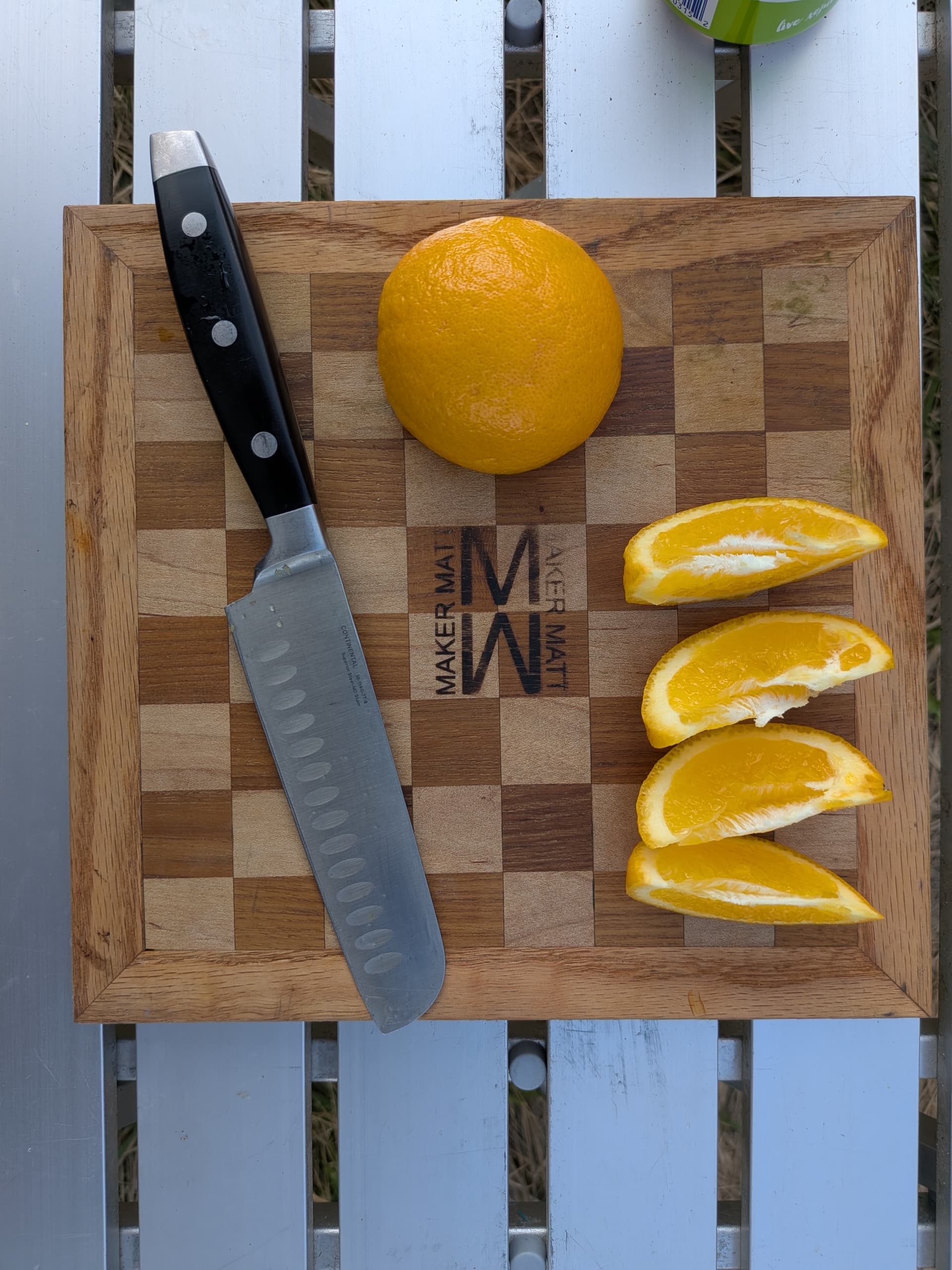
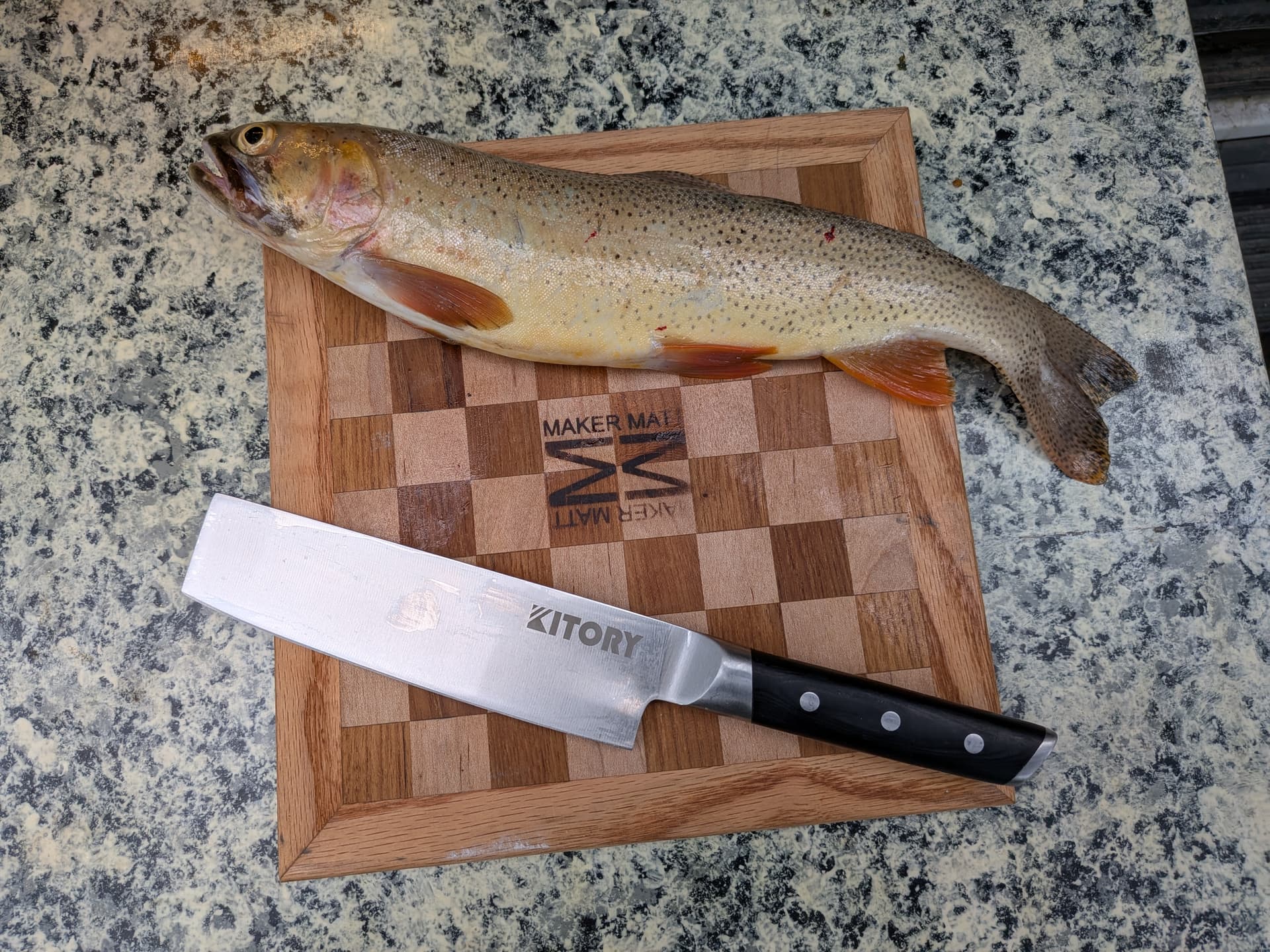
First brown trout I ever caught, while fly fishing in Wyoming.
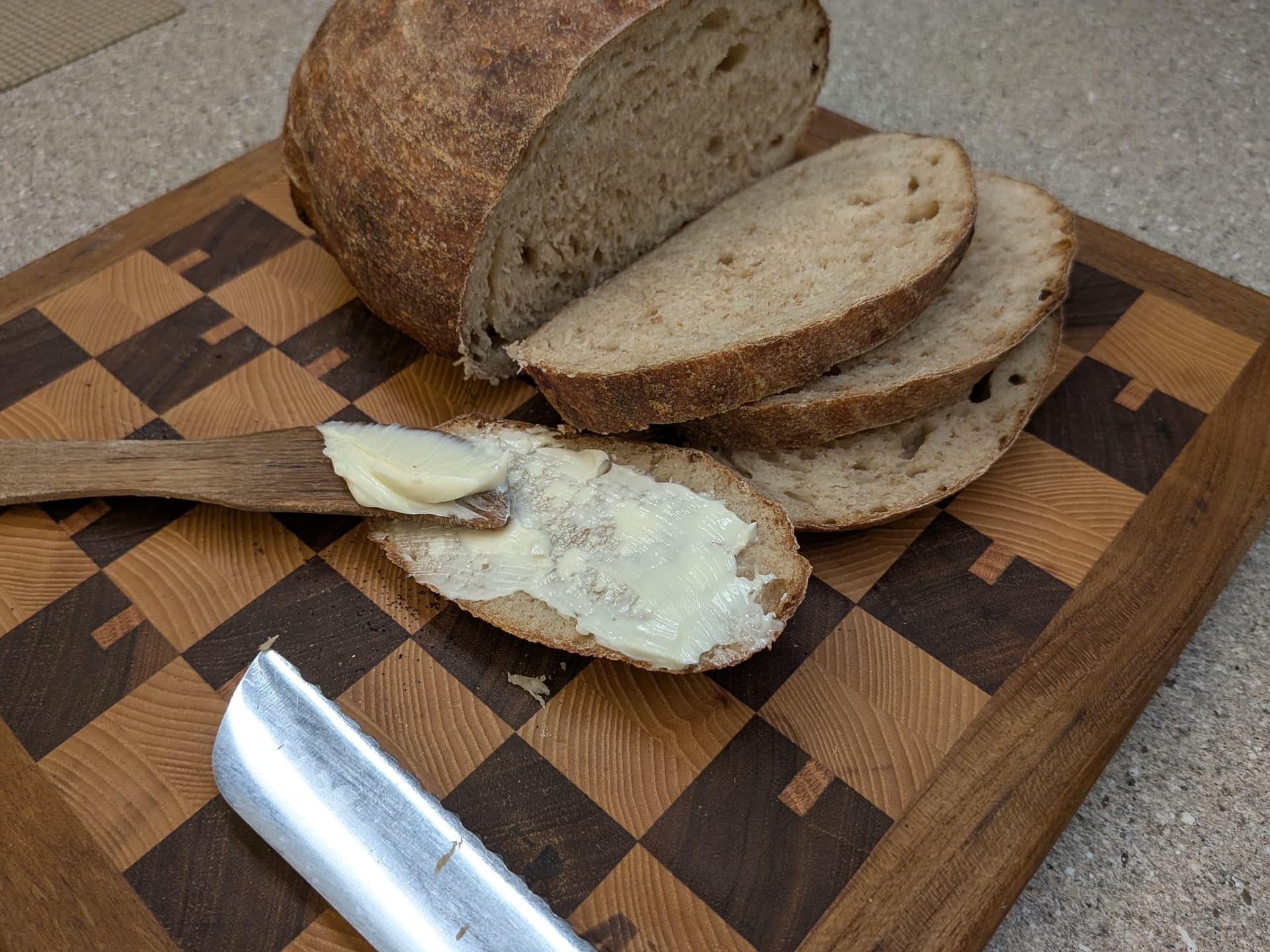
Everybody loves fresh sourdough bread.
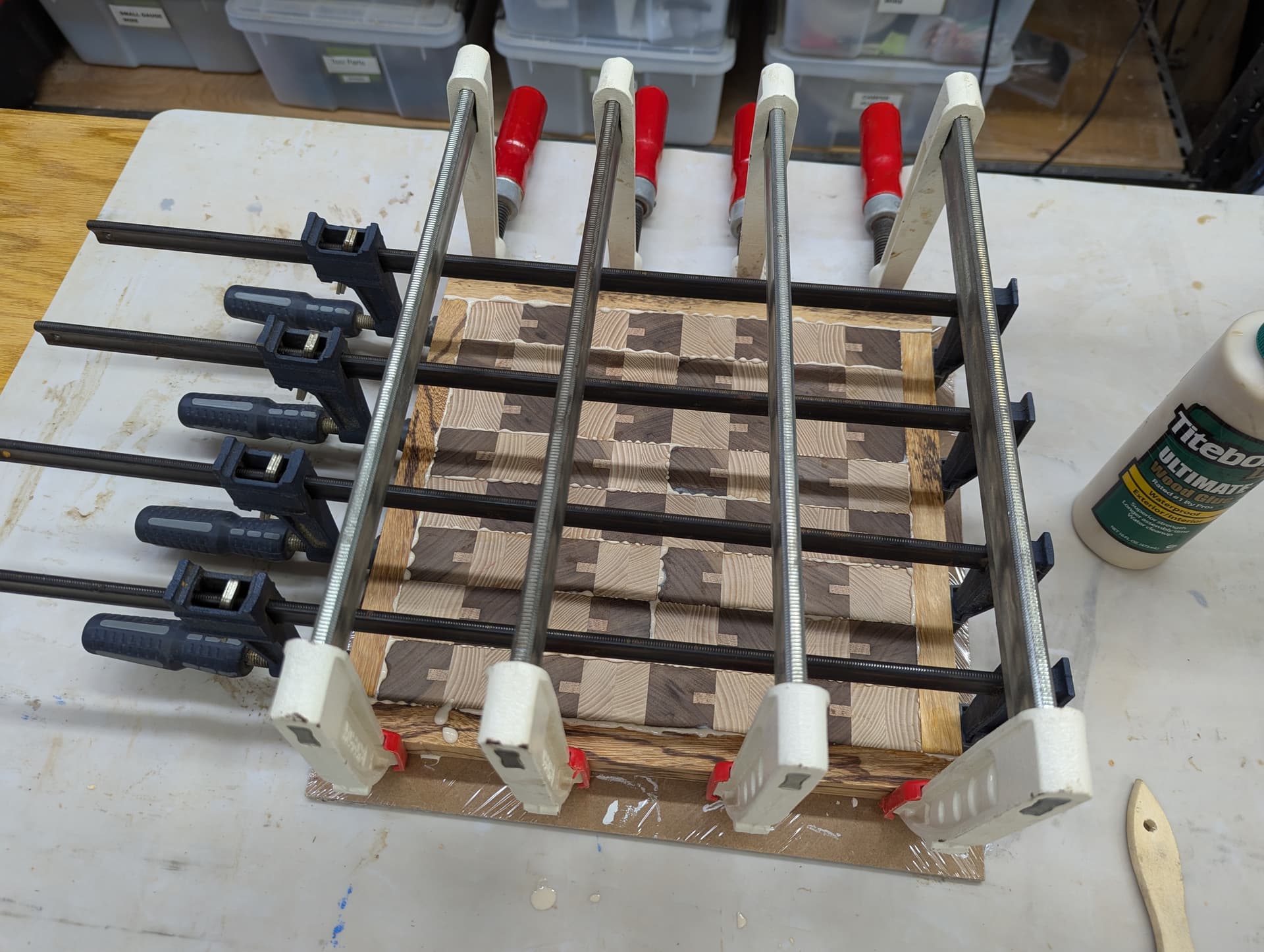
90 Degree joinery with a red oak border.
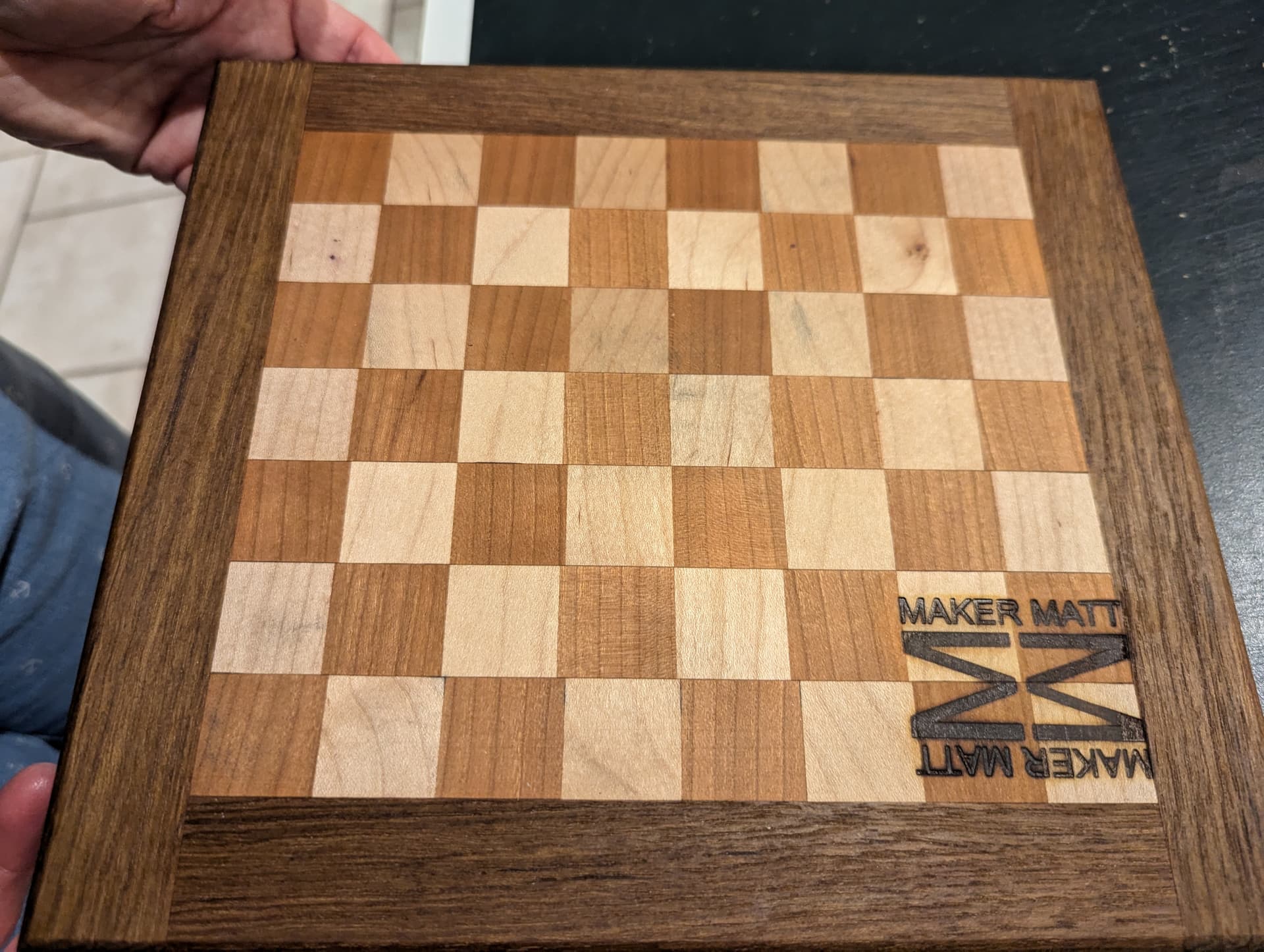
Cherry and teak process
The teak was repurposed from furniture I had bought in the mid-80s.
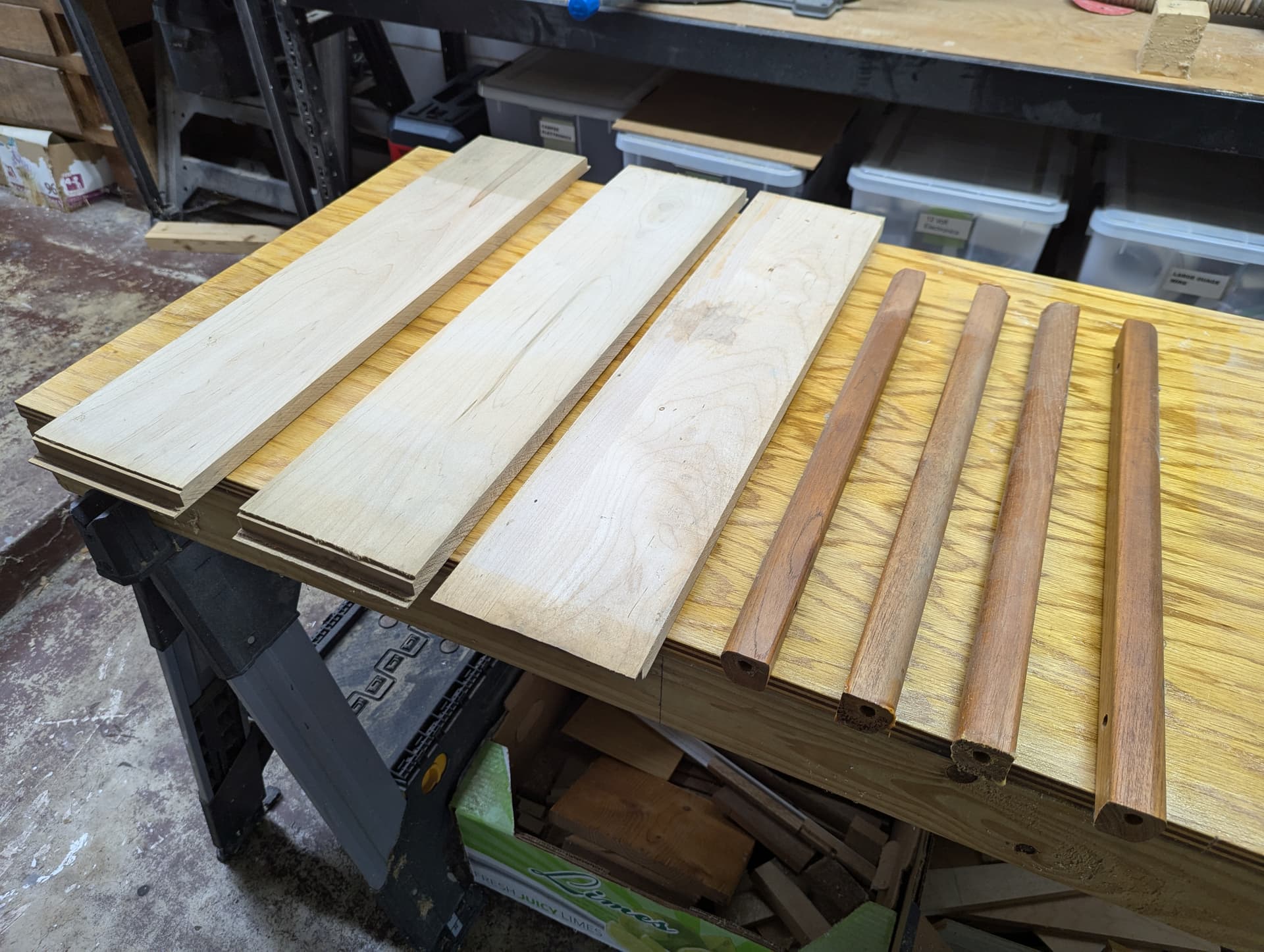
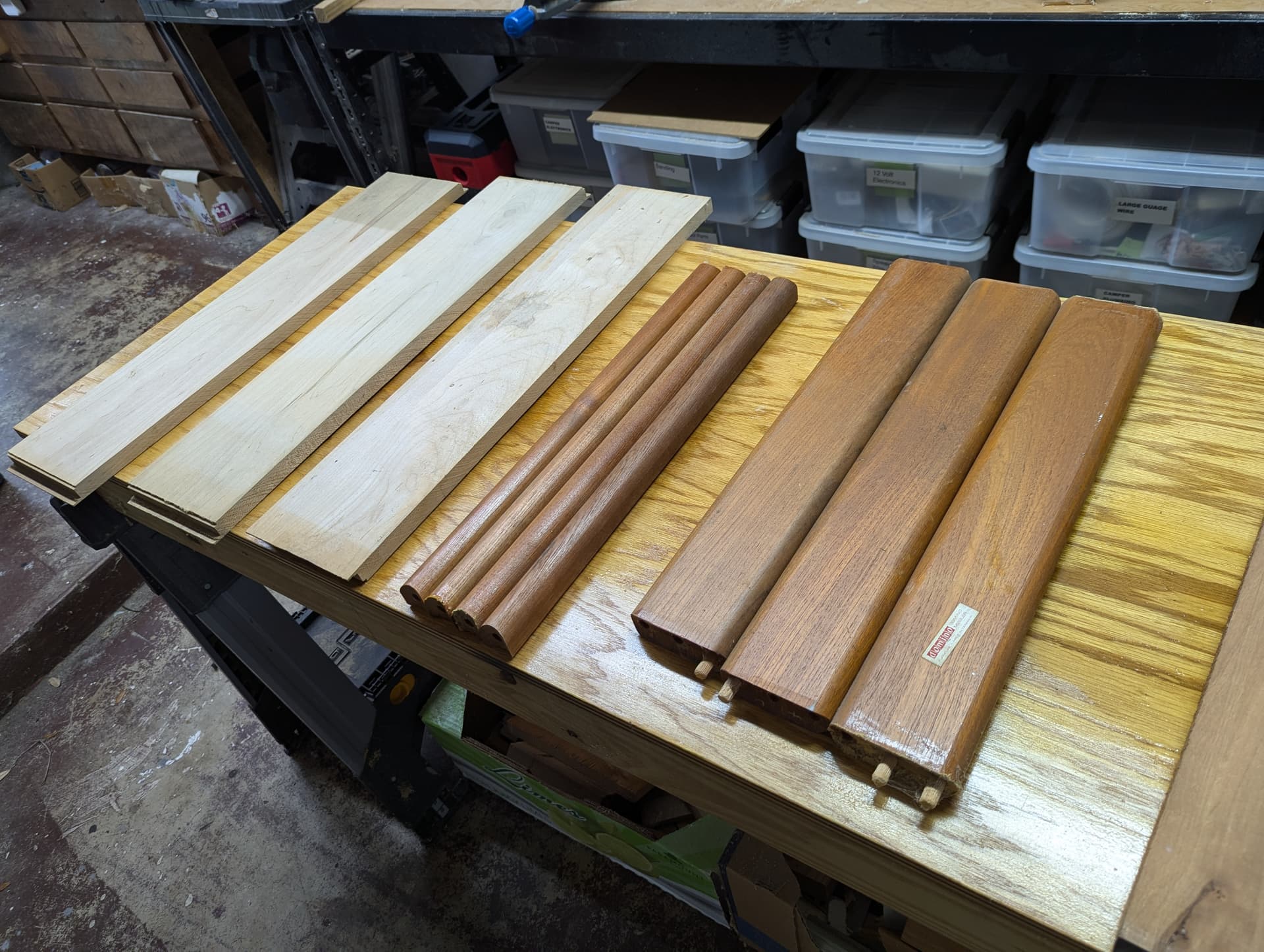
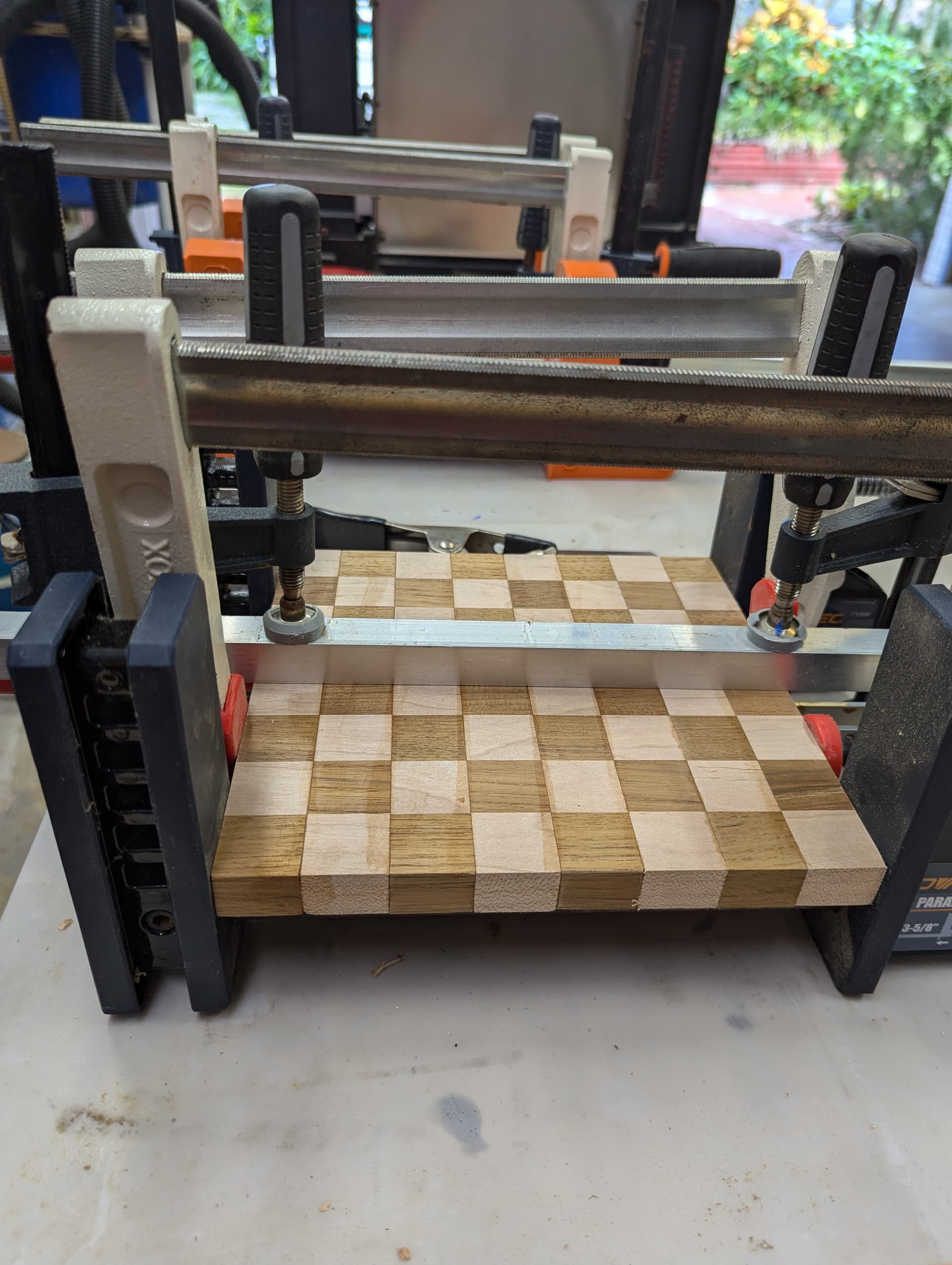
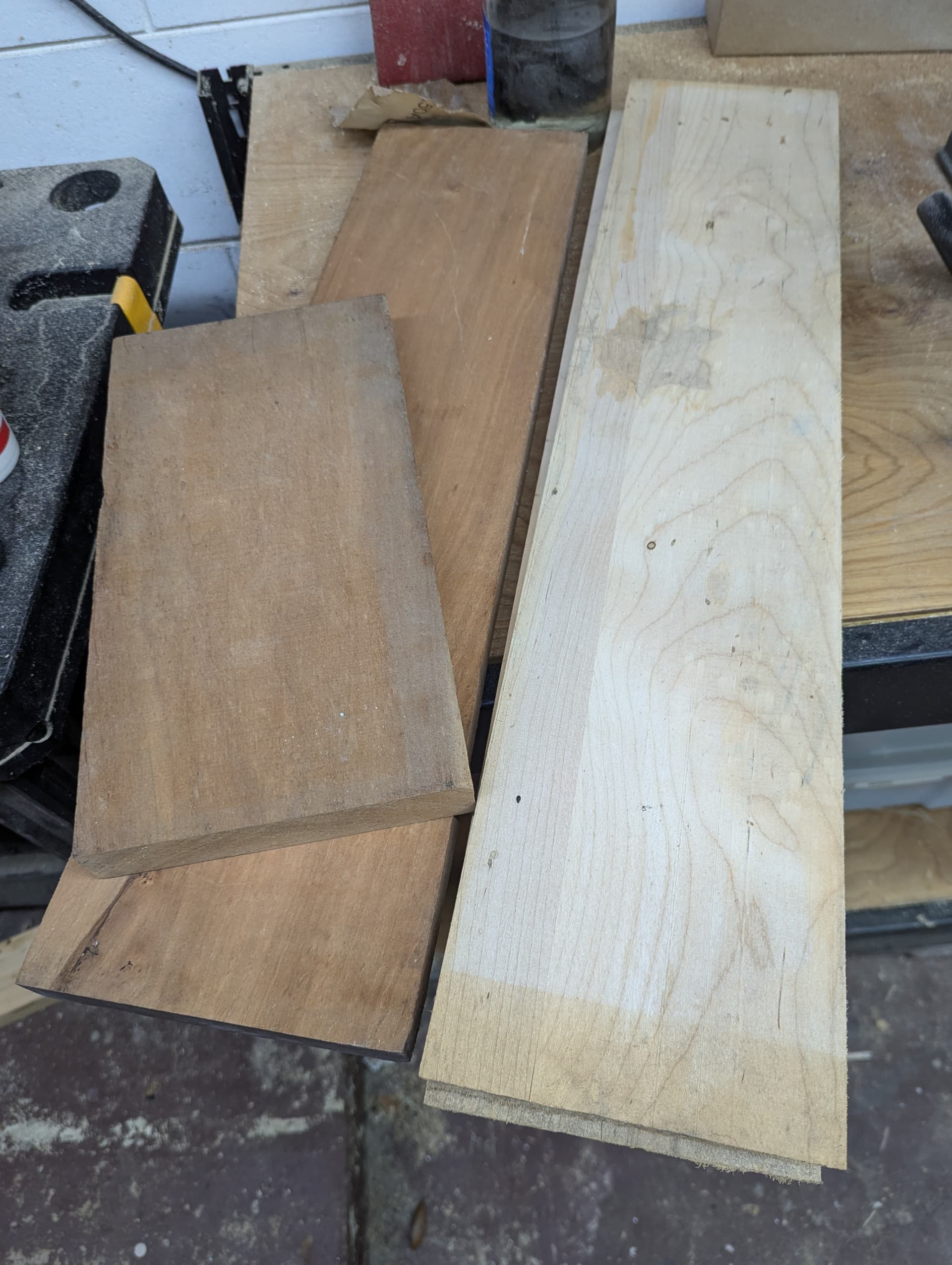
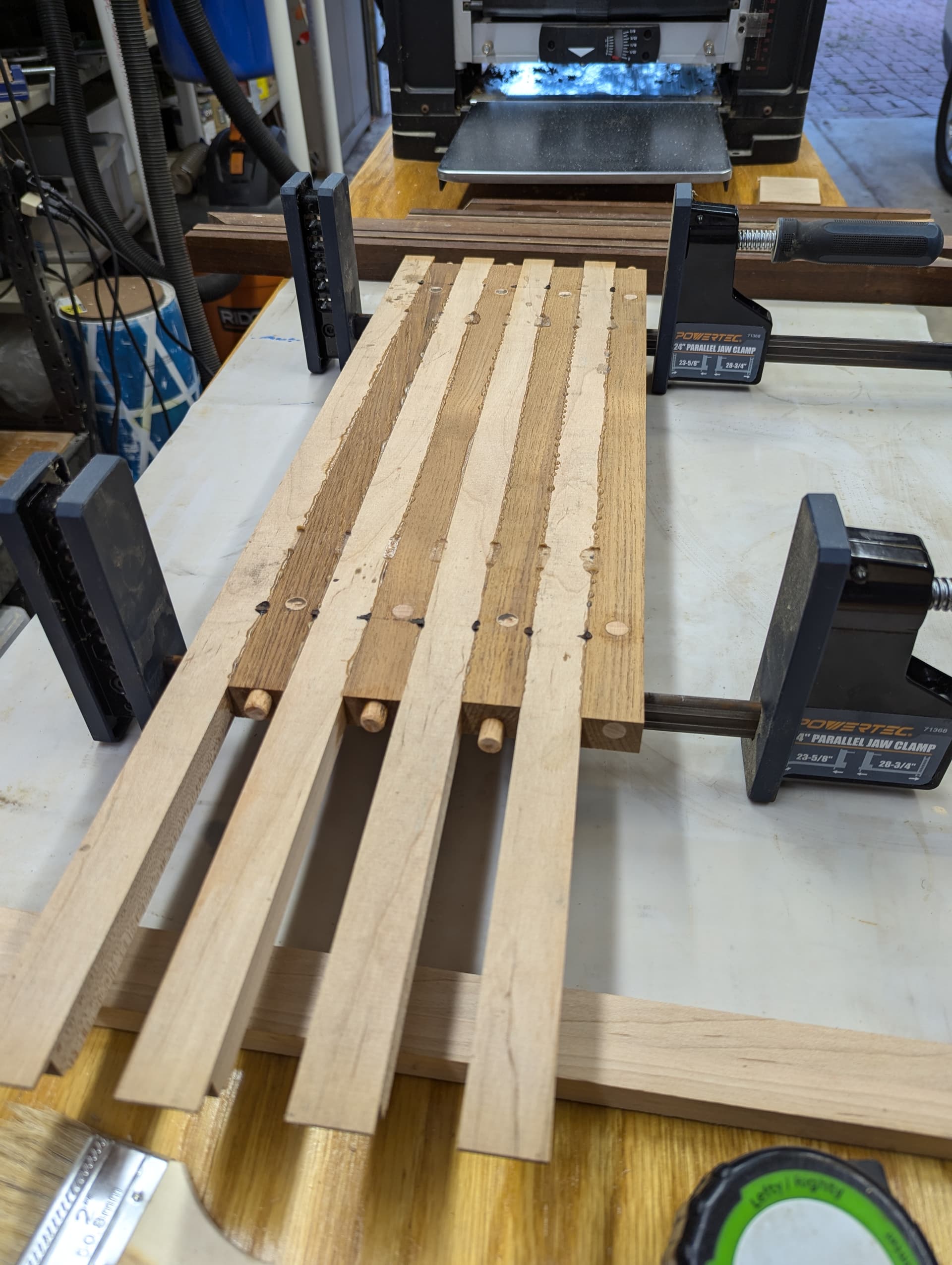
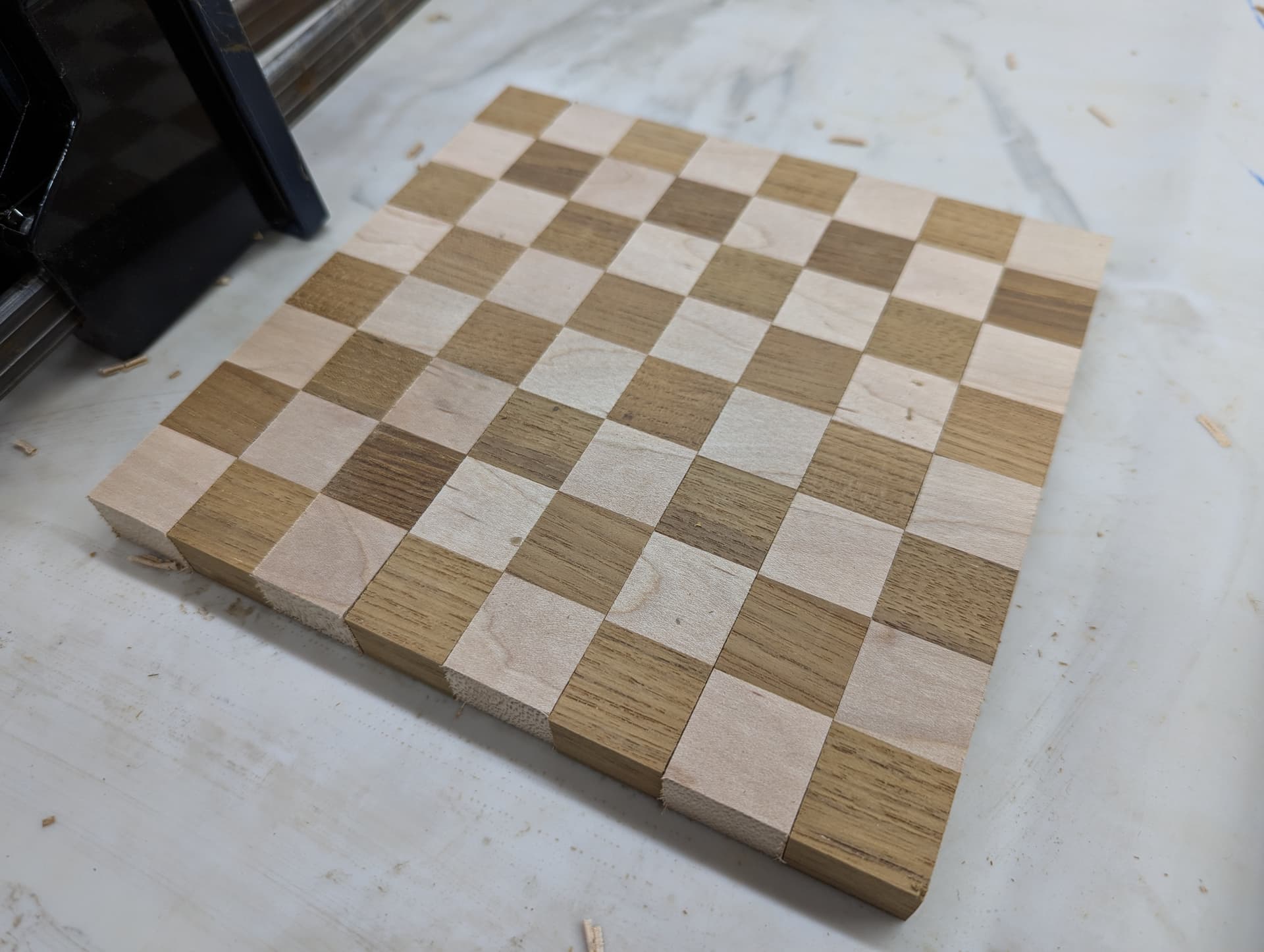
Walnut and oak process
These boards expose the woods end grain making for a durable and long lasting board. Knife cuts in the end grain separate the wood grains, but the grains are able to close and self-heal. The other boards use side-grain. When you use a side-grain board, the knife cuts he wood fibers, and the wood is damaged forever. The only repair possible for side-grain wood is to sand it or plane it down, removing the surface of the board.
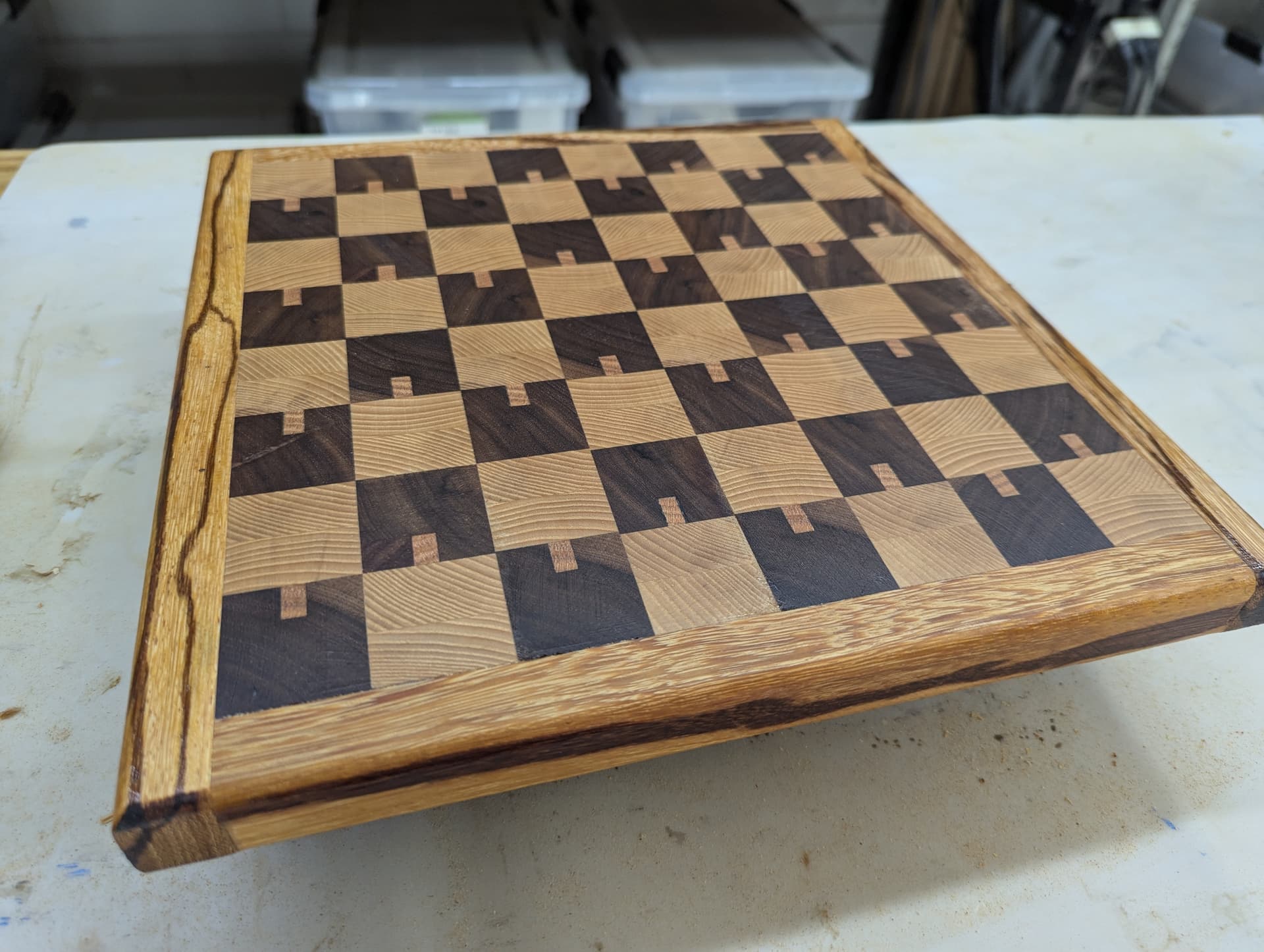
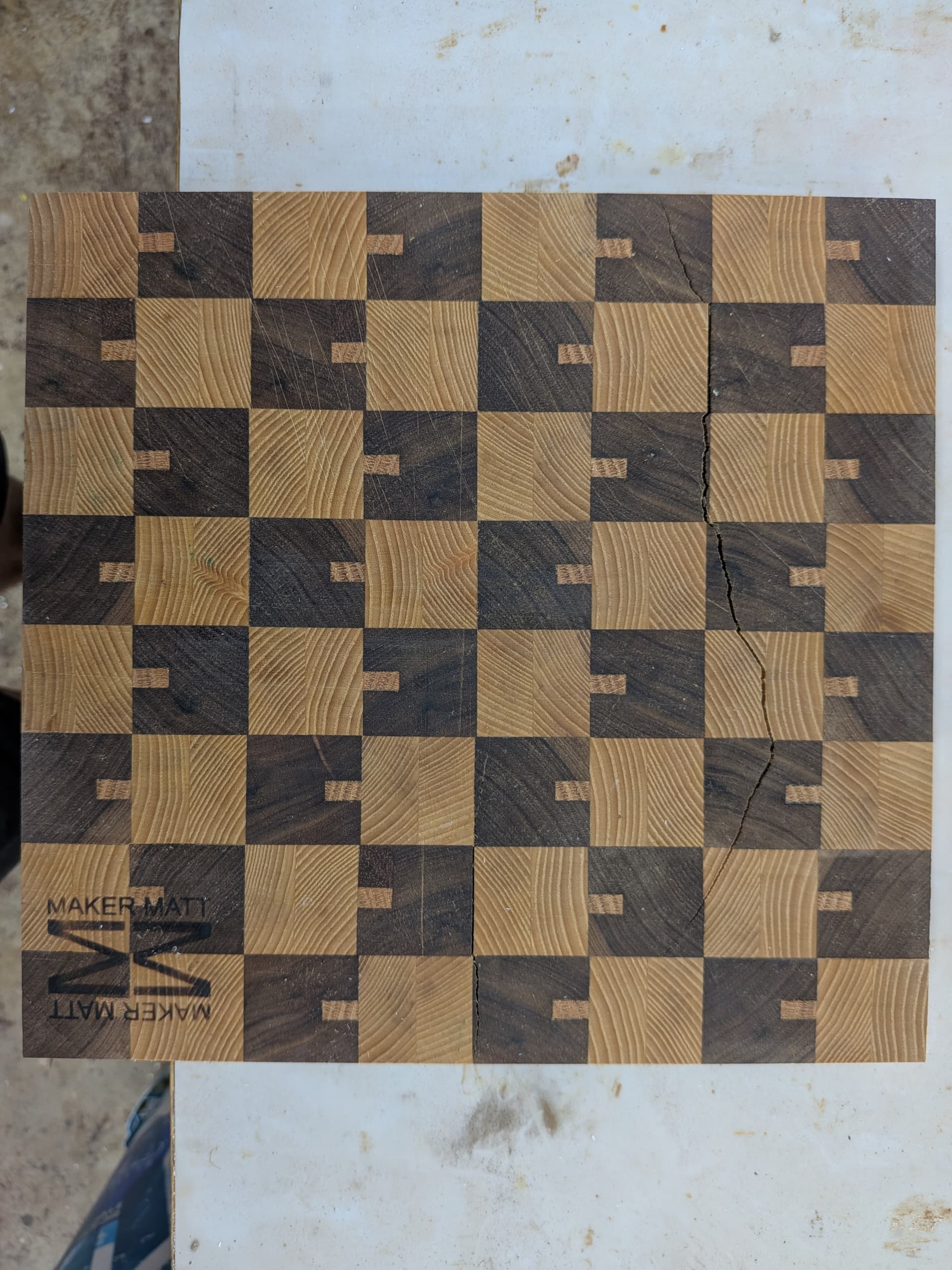
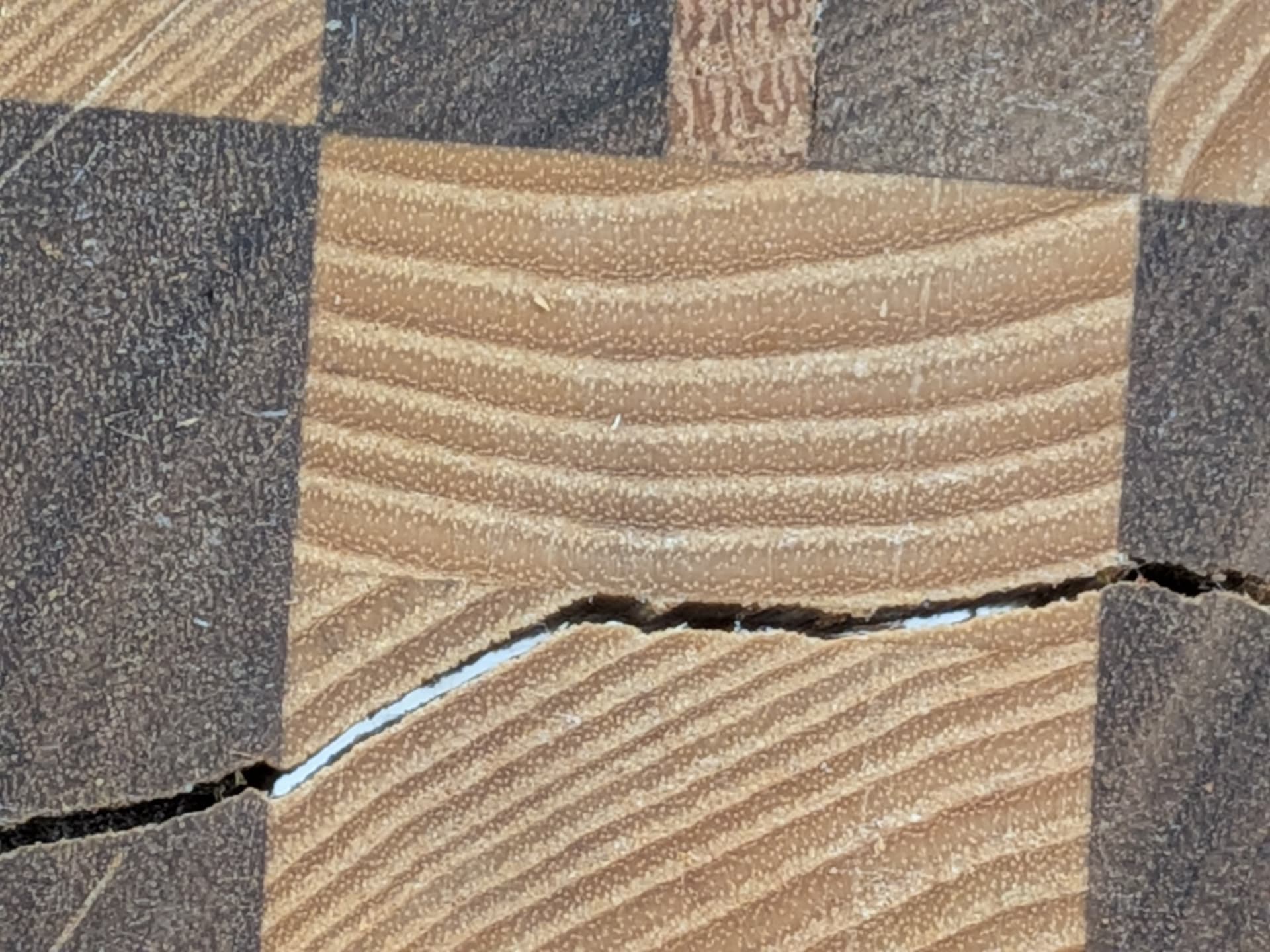
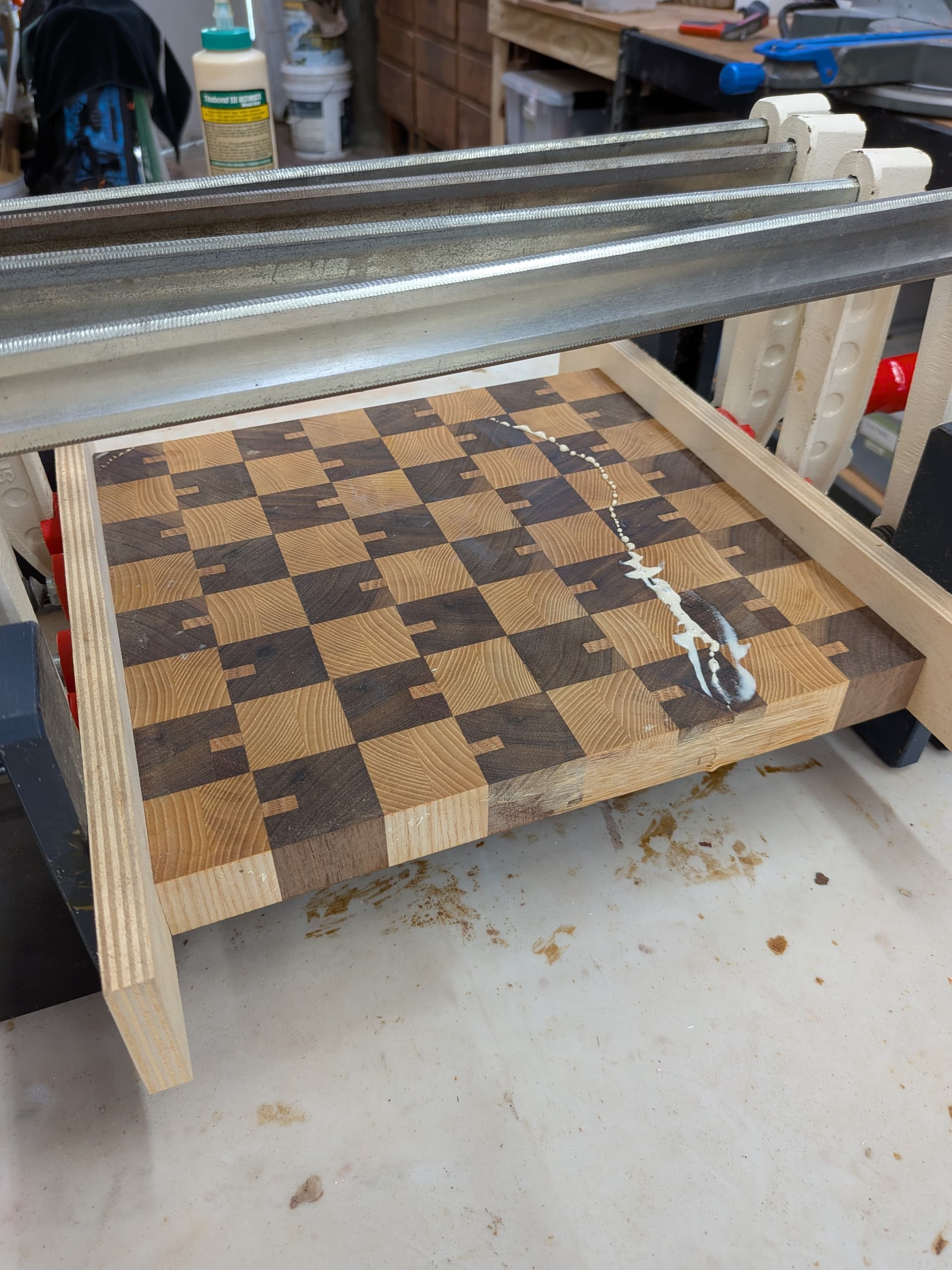
Cutting board repair process
This board fractured in two locations, with the largest fracture across the board. Stress from an improperly fitted boarder pulled the board apart. The frame was slightly too large, secured with Titebond III glue and emmence pressure from steel clamps. Glue is strong than wood and over time the board split to releave the pressure. Had the board been edge-grain versus end-grain, but board probably would not have failed. I had to cut the zebra-wood border off to repair it, and later discovered I liked what it looked like boarderless. The former crack is completely invisible.
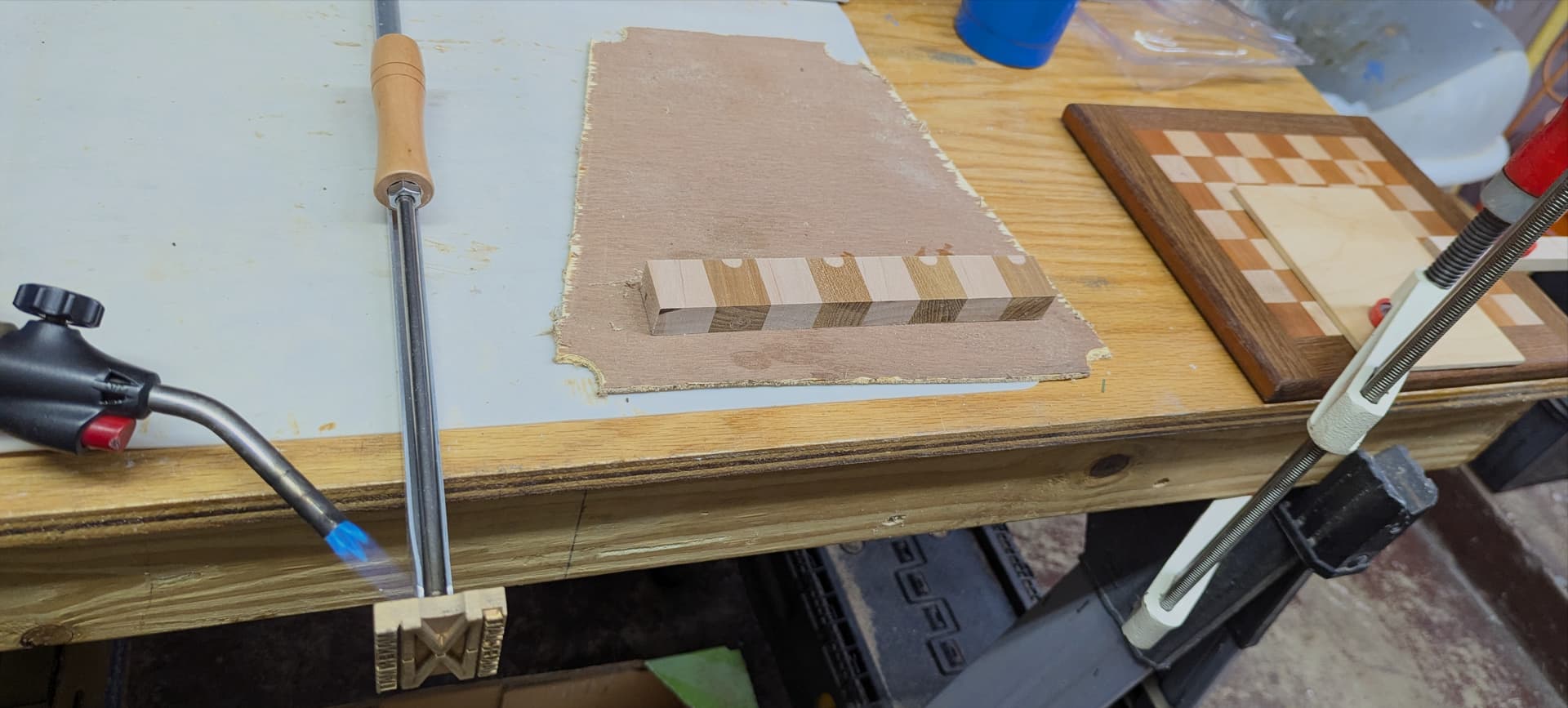
Second to the last step is burning in the MAKER MATT logo. I use a propane touch and a laser temperature meter. Using a jig held down with clamps, the burning iron is applied for about 3 seconds when it reaches 600 degrees F.
Final step is to apply butcher block conditioner.